If you are trying to work out who pays on a first date in Spain, start here: most Spaniards split it, and nobody at the table will think that is unromantic. A survey of Spanish singles by the dating platform Adopte found that 68% believe the first-date bill should be paid a medias, half each, because it is a fair, equal way to begin (The Objective).
That does not mean anything goes. One small phrase, “te invito,” flips the default. The check rarely shows up unless you ask for it. Tipping works very differently from what you know in the US or Canada. And if your date grew up somewhere with stronger treating traditions, the expectations can shift again.
Below you will find the verdict, what Spanish singles actually say they expect, how the bill physically works in a Spanish bar or restaurant, the exact phrases to use, word-for-word scripts, and a comparison table that puts Spain next to Japan, the UK, the Middle East and North America.
Who pays on a first date in Spain: the short verdict
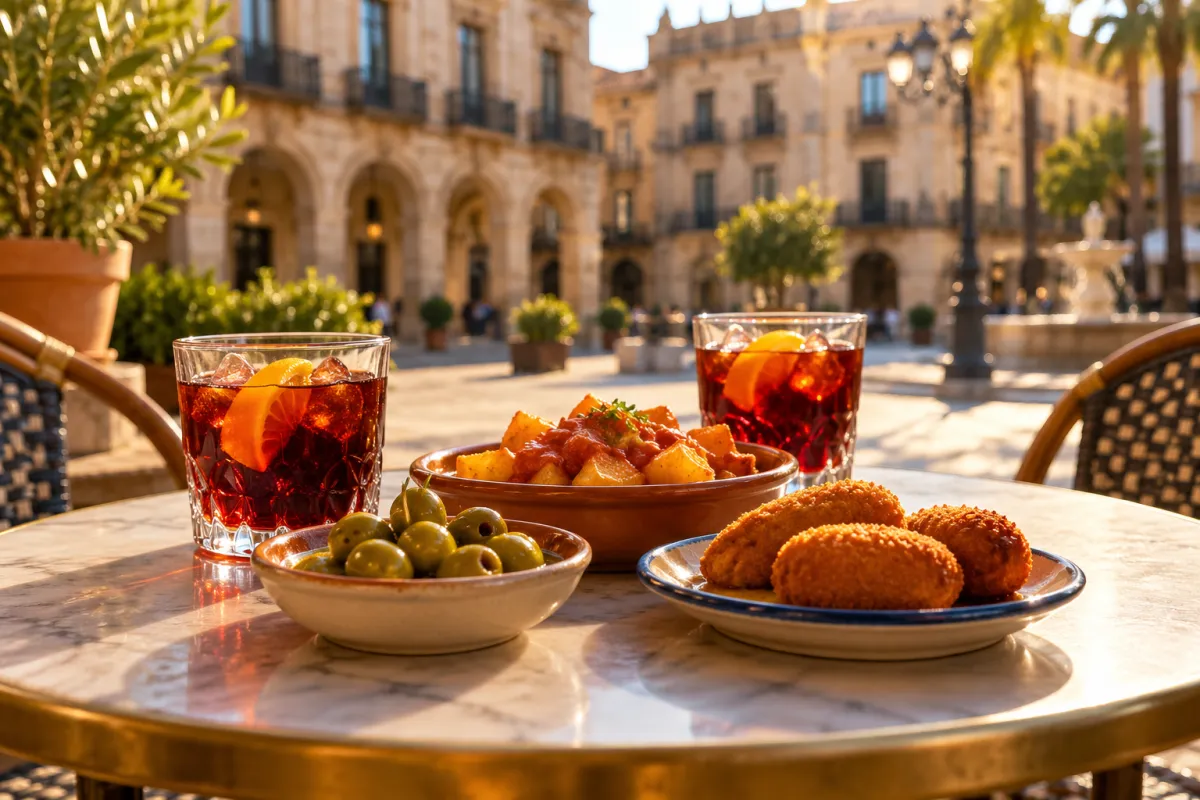
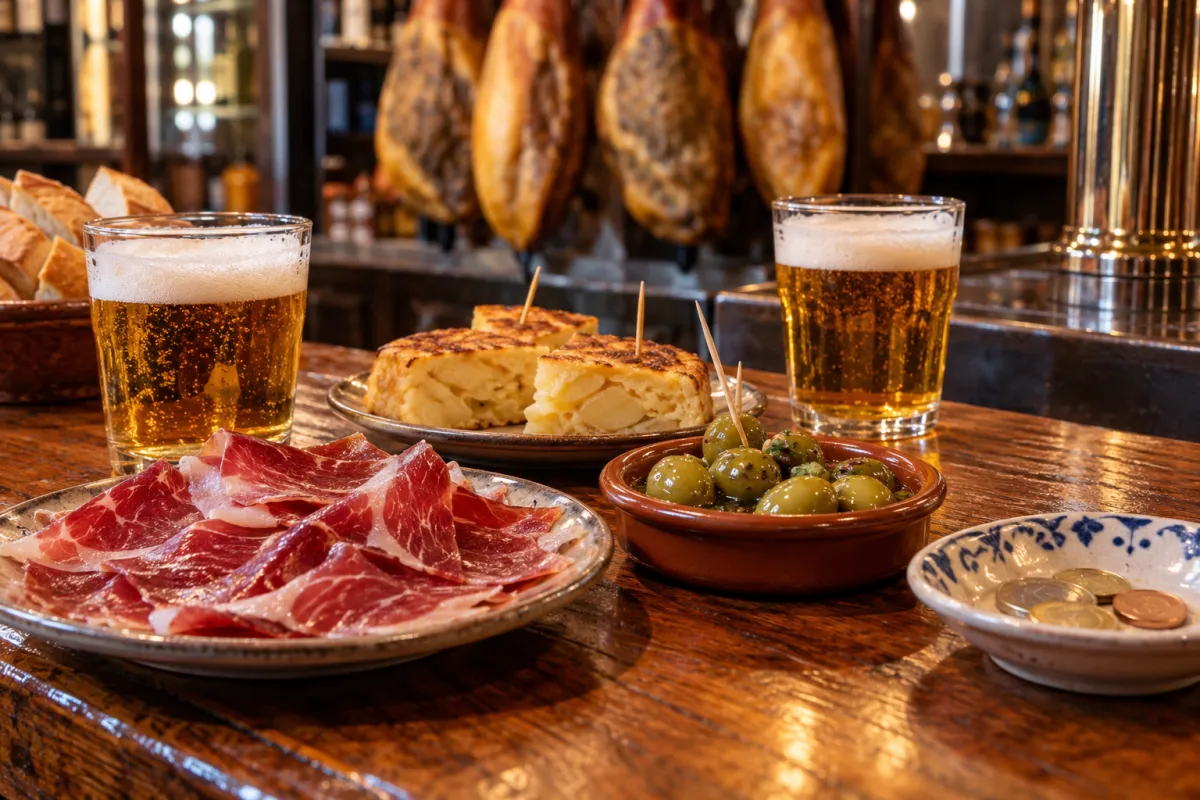
Splitting is the fair, low-pressure default. If you are a visitor from North America, the biggest adjustment is that splitting carries none of the “we’re just friends” signal it sometimes does at home. In Spain it reads as normal, modern and respectful, whether the date is a coffee, a vermut before lunch, a few tapas or a sit-down dinner.
Here is how the most common first-date situations usually play out:
- Neither of you made a formal invitation: split it evenly. Itemizing every croqueta is unusual between two people; half and half is the norm.
- One person clearly invited: if your date said “te invito a un café” or “te invito a cenar,” they are signaling that they will pay. Accept with thanks.
- You are hopping between bars: alternating is very common. One of you pays for the first drinks, the other covers the next stop. Nobody keeps a strict tally.
- One person ordered much more: the person who ordered the expensive bottle or the extra course usually offers to cover the difference or the whole thing.
- Gender roles: a minority still expect the man to pay, but assuming it is risky. Offer, read the response, and do not treat either answer as a test.
What Spanish singles actually expect
Spain’s official statistics do not track who pays on dates, so the clearest snapshot comes from a survey of singles run by Adopte (formerly AdoptaUnTío) and reported in the Spanish press. It is a dating-platform survey rather than a nationally representative study, so treat it as a useful picture of attitudes among people who date online, not as a census.
Beyond the majority who prefer splitting, the same survey found a conservative minority of 28% who expect the man to pay on a first date, while only 3% think the woman should pick up the check (The Objective). That gap matters: if your date expects a traditional treat, you will likely sense it, but you should not walk in assuming it.
There is also a strategic layer. Among the people who prefer to split, 42% said they do it because they believe it improves their chances of a second date (The Objective). In other words, splitting is often seen as attractive, a sign that you see the other person as an equal and are not trying to create a sense of debt.
Spanish singles are also fairly open about money as a topic. In the survey, 73% said money should be discussed on a first date to find out whether you have financial affinity (The Objective). That does not mean comparing salaries over patatas bravas. It means that saying “I prefer to split on first dates” or “I’m on a budget this month, let’s keep it simple” is unlikely to shock anyone.
The takeaway for a visitor or a Spanish-speaking date in Toronto or Miami is simple: suggesting a split is safe, being generous is appreciated, and the worst move is a silent standoff when the check lands.
The “te invito” rule: whoever invites, pays
In Spanish, invitar means more than “to invite.” It means “to treat.” When someone says “te invito,” they are not only asking you along, they are saying the bill is theirs. This is the single most useful thing to understand about who pays on a first date in Spain, because it can override the split default in one sentence.
You will hear it in a few forms:
- “¿Te invito a algo?” Can I get you something? Said at a bar, it means they are buying.
- “Te invito a cenar.” I’d like to take you to dinner, my treat.
- “Invito yo.” It’s on me. Usually said when the check arrives.
- “Hoy invito yo.” This one’s on me. It implies the next one could be on you.
The polite way to respond is a single, genuine counter-offer and then acceptance. Something like “¿Seguro? Podemos pagar a medias” (Are you sure? We can split), and if they insist, “Vale, gracias. La próxima la pago yo” (Okay, thank you. I’ll get the next one). Arguing over the check three or four times can feel more awkward in Spain than simply accepting, especially between two people who have just met.
Watch for the reverse situation too. If you used the phrase “te invito” when you suggested the date, you have set the expectation that you will pay. Using “¿Quedamos para tomar algo?” (Shall we meet for a drink?) instead keeps things open and lets the split default apply.
Some people treat to quedar bien, to make a good impression. That is fine, but it should never come with strings. Paying for a drink does not create any obligation beyond a thank-you.
How the bill works in a Spanish bar or restaurant
For a fuller walkthrough of service, payment and group splitting, see our guide to paying the bill in Spain, from la cuenta to a escote. Here are the points that matter most on a date.
You have to ask for the check
In much of Spain, bringing the check before you ask is considered pushy, because lingering at the table after eating, known as sobremesa, is part of the meal. If you are waiting for the server to drop the bill, you may wait a long time. Catch their eye, make a small writing gesture in the air, or say “La cuenta, por favor.” This also gives you a natural moment to settle who pays: one of you raises it before the check arrives instead of reacting to it.
Paying at the bar versus at the table
In casual tapas bars, you often pay at the counter on your way out, and staff may tally what you had from memory or a running ticket. The casual way to ask is “¿Me cobras?” (Can you ring me up?). If you are splitting, step up together and say so; if one of you is treating, that person goes to the counter while the other gets coats or waits by the door.
Splitting card payments and Bizum
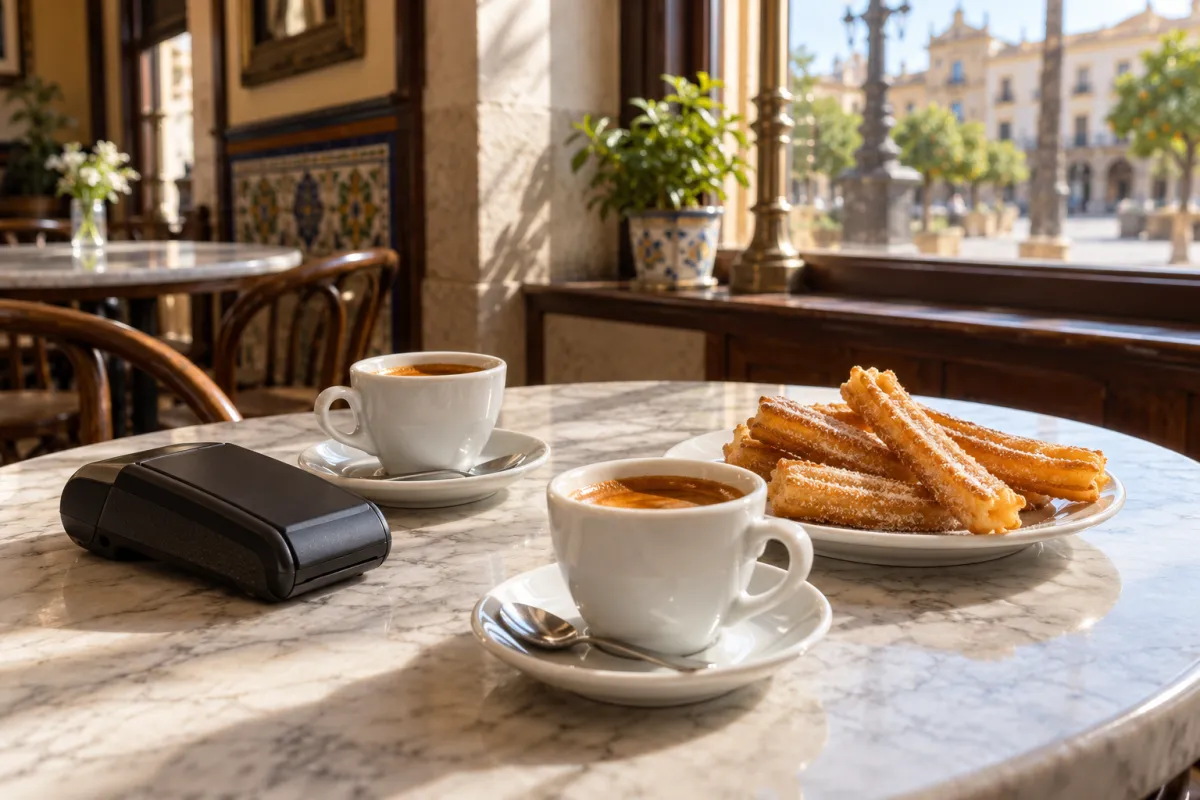
Card payments are widely accepted, and servers usually bring a portable card terminal to the table. Many places will run two cards if you ask “¿Se puede pagar por separado?”, but some small bars prefer a single payment. In that case, one person pays and the other sends their half by Bizum, a bank-linked mobile payment service that many people in Spain use to pay friends back. As a visitor without a Spanish bank account, you may not have it, so offering cash for your half or paying the whole of the next stop works just as well.
Tipping on a date in Spain
Tipping is optional and modest in Spain. Servers are not paid on the assumption of large tips the way they often are in the US and Canada, so the North American habit of calculating a percentage is not expected. Leaving the small change, rounding up, or adding a coin or two for good service is plenty. If one person paid the meal, the other can leave the coins; if you split, each of you can add a little. Some restaurants charge separately for bread or small starters that arrive at the table, so glance at the check before you pay.
Spanish phrases to ask for and split the bill
You do not need fluent Spanish to handle the check gracefully. These phrases cover almost every situation on a date.
| Phrase | What it means | When to use it |
|---|---|---|
| La cuenta, por favor. | The check, please. | At a table, when you are ready to go. |
| ¿Nos trae la cuenta cuando pueda? | Could you bring us the check when you get a chance? | A softer, very polite version at a restaurant. |
| ¿Me cobras? | Can you ring me up? | At the bar counter in a casual place. |
| ¿Pagamos a medias? | Shall we split it in half? | To suggest an even split to your date. |
| ¿Se puede pagar por separado? | Can we pay separately? | To ask the server to run two payments. |
| Te invito. / Invito yo. | It’s on me. | When you want to treat. |
| La próxima la pago yo. | I’ll get the next one. | When accepting a treat, to promise reciprocity. |
| ¿Aceptan tarjeta? | Do you take cards? | Small bars or cafés, before ordering if unsure. |
| Está bien así, gracias. | That’s fine as is, thanks (keep the change). | When leaving the change as a tip. |
| Vamos a escote. | Let’s all chip in. | Group outings, less common for two people. |
A quick note on a medias versus a escote: both describe sharing the cost, but a medias literally means “in halves” and fits two people perfectly, while a escote is more often used when a group pools money.
Scripts for the moment the check arrives
Most awkwardness comes from hesitation, not disagreement. Pick the script that matches your situation and say it before or right as the check arrives. For more situations, our guide on how to ask to split the bill without awkwardness has dozens more.
You want to split
“This was great. ¿Pagamos a medias?” Keep it light and say it with a smile. In Spain, this is about as neutral as asking for the check itself.
Your date offers to pay
“That’s really kind. Are you sure? I’m happy to split.” If they insist: “Vale, gracias. La próxima la pago yo.” Then actually follow through if there is a next time.
You want to treat
“Hoy invito yo, I’d like to.” If they push back: “You can get the next one.” This keeps it generous without implying the other person owes you.
You sense they expected you to pay
If your date hesitates after you suggest splitting, you do not have to change your plan, but you can soften it: “I usually split on first dates so it feels even. Is that okay with you?” Most people will appreciate the clarity. If you want to cover it, simply do: “Actually, let me get this one.”
Your budgets are different
Steer the plan before the check, not after. “How about tapas at the counter instead of the tasting menu? I’m keeping things simple this month.” For a realistic picture of what dates cost, see how much to spend on a first date.
How Spain compares: Japan, the UK, the Middle East and North America
If you date across cultures, or travel often, it helps to see Spain alongside other places. The table below describes common patterns, not rules; individual people, families and cities vary a great deal. For the phrases to ask for the bill or to pay separately in other languages, read our guide to asking for the bill in different languages.
| Country or region | Who usually pays on a first date | Splitting norm | Tipping and service |
|---|---|---|---|
| Spain | Split by default; the person who says “te invito” pays | Even split (a medias) or alternating rounds | Optional; small change or rounding up |
| United States | Often the person who asked; splitting increasingly common | Split evenly or separate checks; servers usually accommodate | Tip expected on table service |
| Canada | Similar to the US; the inviter often pays | Separate payments are routine; servers often ask | Tip expected on table service |
| United Kingdom | Mixed; splitting is common, the inviter may treat | Split evenly, or take turns buying drinks in pubs | Service charge sometimes added to the bill; check before tipping again |
| Japan | Varies; splitting (warikan) is common, one person may treat or pay more | Even split, often paid at the register | No tipping |
| Middle East (varies by country) | Often the host or inviter, especially when hospitality is involved | Splitting less common in traditional settings; reciprocity matters | Varies by country and venue; check the bill |
Who pays on a date in Japan
Japan has a word for splitting the bill evenly: warikan. It is standard among friends and coworkers, and many couples split on dates as well, though some still have one person treat or pay a larger share, and opinions on this are actively debated. Practically, you often pay at the register on the way out rather than at the table, and tipping is not part of the culture, so leaving extra money can cause confusion. If you are treated, the expected thank-you is “gochisousama deshita.” Our guide on whether you need cash in Japan covers the register, trays for cash and warikan in detail.
British round-buying etiquette explained
In a British pub, groups often take turns buying a “round” of drinks for everyone. The unwritten rule is that if you accept a drink in someone’s round, you buy one of the next rounds. On a date, this tends to become simple alternation: you buy the first drinks, your date gets the next ones. It is a close cousin of the Spanish habit of “la próxima la pago yo,” just more ritualized. Restaurant meals are more often split or covered by whoever invited, and some places add a service charge to the bill, so read it before adding a tip. For the full picture, see who pays on a date in the UK versus the US.
Middle Eastern hospitality: who pays
Across much of the Middle East, hospitality carries real weight, and the host or the person who extended the invitation is often expected to pay. Guests may find that a sincere offer to contribute is warmly refused, sometimes more than once. That is not a test; it is generosity. The respectful approach is to offer genuinely, accept if declined, and reciprocate later with a meal, a coffee or a thoughtful gesture. Customs differ significantly between countries, cities, families and generations, and dating norms vary even more, so take your cue from your date rather than from assumptions.
The US and Canada
At home, the traditional script was that the person who asked pays, and that still holds for many people. Splitting has become far more common, and servers in both countries are used to running separate cards. The big difference from Spain is tipping: on table service it is expected, so if you split, make sure the tip is split too. If you are dating someone from Spain in North America, they may suggest splitting more readily than you are used to, and that is simply their default, not a lack of interest.
Meeting someone new in Spain: practical safety
Spain’s café terraces, plazas and tapas bars make it easy to meet in public, which is exactly what you want with someone new. A few habits keep a first date relaxed:
- Meet in a public place. A busy café, a bar with a terrace or a restaurant on a main street is ideal. Daytime options like coffee or a pre-lunch vermut are great for a first meeting.
- Tell a friend. Share where you are going, who you are meeting and roughly when you expect to be done.
- Arrange your own way home. Know your metro line, taxi app or walking route before you go, so you never depend on your date for a ride.
- Leave if you feel uncomfortable. You can pay for your share, say “I’m going to head off, thanks,” and go. You never owe anyone more time because they bought you a drink.
- Keep paying simple. Carry a card and a little cash so you can always cover your own half without relying on anyone else.
Want to turn this into an actual plan? MeetNow is a free app for meeting people in person: a host posts a plan at a public place, says who pays (host pays, split, pay your own or free) and picks who joins. It is live on the web and works in your browser, starting in Malta. The Android app is on Google Play; the iPhone app is not in the App Store yet. Open MeetNow and see the plans posted in Malta.
Frequently asked questions
Is it rude to split the bill on a first date in Spain?
No. Splitting is the most common choice among Spanish singles and is generally seen as fair and modern. Suggest it lightly, for example “¿Pagamos a medias?”, and no one will read it as stingy. The one exception is when your date clearly said “te invito”; then accept graciously and offer to treat next time.
What does “te invito” mean on a date in Spain?
“Te invito” literally means “I invite you,” but in practice it means “I’m paying.” If someone uses it when suggesting a drink or a meal, they are signaling they will cover the bill. The polite response is a single thank-you and an offer to return the favor, such as “La próxima la pago yo.”
Do you tip on a first date in Spain?
Tipping in Spain is optional and modest. Service is not built around tips the way it is in the US and Canada, so leaving small change or rounding up for good service is enough. Whoever pays usually handles it, or you can each add a few coins if you split.
Who pays on a date in Japan?
In Japan, splitting the bill, called warikan, is common among friends and on many dates, though some couples still have one person treat or pay a larger share. There is no tipping, and you often pay at the register on the way out. If you are treated, a warm “gochisousama deshita” is the expected thank-you.
How does British round buying work on a date?
In a UK pub, people often take turns buying a round of drinks for the group. On a date, that usually means you buy the first drinks and your date gets the next ones, which keeps things even without anyone splitting a card payment. Meals are more often split or paid by whoever invited.
In Middle Eastern hospitality, who pays?
In many Middle Eastern cultures the host, or the person who extended the invitation, is expected to pay, and guests may find their offer to contribute warmly refused. Customs vary a lot by country, family and generation, so offer once or twice sincerely, accept if declined, and reciprocate later with a meal or gesture of your own.