You covered the concert tickets, the group dinner or the cabin deposit, and weeks later the money still hasn’t come back. Most people in that spot feel two things at once: annoyed that they’re out of pocket, and worried that asking will make them look petty. Knowing how to ask for money back from a friend without wrecking the friendship comes down to timing, specifics and tone, and it is far less awkward than you think.
In almost every case your friend hasn’t paid because they forgot, not because they’re avoiding you. A clear, friendly reminder solves most of these situations in one message. The rest need a second nudge, a direct conversation, or a decision about how much the money matters compared with the friendship. This guide covers all four steps, with 20 copy-paste scripts.
Short answer: Ask soon (within a few days for shared costs), be specific about the amount and what it was for, make paying easy (send a payment request or your details), and keep the tone light. If there’s no reply, follow up once privately after about a week, then have a direct, kind conversation. For personal loans, agree the repayment date at the start.
How to Ask for Money Back From a Friend: The Basics
Before the scripts, five principles. They matter more than any exact wording.
Ask soon
The longer you wait, the stranger the request feels to both of you. For shared costs like a dinner or tickets, the best time is the same day or within a few days, while everyone still remembers the plan. Waiting a month turns a routine “you owe me $40” into something that feels like a grievance.
Be specific
Name the amount, what it was for and, if helpful, the date. “Hey, about the $60 for the Saturday concert tickets” is easy to act on. “You still owe me some money” makes your friend search their memory and feel accused.
Make paying easy
Remove every small obstacle. Send a payment request, share your Zelle email or phone number, or offer to take cash next time you meet. The fewer steps, the faster you get paid.
Keep it light, not apologetic
You don’t need to say sorry for asking for your own money. A neutral, friendly tone works best: no guilt, no sarcasm, no essay about your finances.
Stay private
Ask one-on-one, not in the group chat. Even if three people owe you, message each separately. Public reminders embarrass people and usually slow payment down.

Scenarios: When to Ask and What Tone to Use
Use this table to match the situation to the right timing and tone. The shorter the gap and the more routine the cost, the lighter the message can be.
| Situation | When to ask | Tone |
|---|---|---|
| You covered dinner because the restaurant wouldn’t split | At the table or the same evening | Matter-of-fact: “Sending requests now” |
| You bought concert or game tickets for a friend | When you buy, or within a day or two | Friendly, with the exact price including fees |
| You paid a group trip deposit or rental | Before the booking, ideally; otherwise right after | Organized: amount, deadline, how to pay |
| You fronted groceries or supplies for a party | Within a few days, with the receipt total | Light and transparent |
| A friend borrowed cash “until payday” | A day or two after the date they named | Warm but direct |
| A personal loan with no date agreed | Agree a date now, in writing, even by text | Calm, practical |
| It’s been months and you’ve asked before | Ask for a direct conversation | Kind but firm; propose a plan |
If the plan involved several people and costs got tangled, the receipt-tracking approach in our guide to splitting costs on a group trip makes it far easier to send one clear request per person.
20 Scripts, From First Nudge to Final Ask
Copy, paste and adjust. The scripts are grouped by stage, so you can escalate gently without jumping straight to an uncomfortable conversation.
Stage 1: right after the plan (scripts 1–6)
1. “That was so fun! Your share of dinner came to $38. Just sent you a request.”
2. “Got the tickets! They were $72 each with fees. Venmo or Zelle, whichever’s easier for you.”
3. “Here’s the receipt for the party supplies: $84 total, so $21 each. My Zelle is my email.”
4. “I put the cabin deposit on my card. It’s $95 per person. Can you send yours by Friday?”
5. (In person) “Before I forget, you owe me $15 for the movie. Cash next time is totally fine.”
6. “Happy to front the Uber. It was $24, so $12 for you whenever you get home.”
Stage 2: first reminder, a few days to a week later (scripts 7–11)
7. “Hey! Quick reminder about the $38 from dinner on Saturday. No rush, just didn’t want it to slip.”
8. “Just checking you saw my request for the concert tickets? Sometimes they get buried.”
9. “Doing my budget this week. Could you send the $95 for the cabin when you get a sec?”
10. “I think my request might have expired. Here’s my Zelle email again if that’s easier.”
11. “Not sure if you’d already paid me for the tickets? I can’t find it on my end. Can you check?”
Stage 3: second reminder, about two weeks in (scripts 12–15)
12. “Hey, following up on the $72 for the tickets. Could you send it by Friday? Thanks!”
13. “I know things get busy. Can we sort the dinner money this week? I’m happy to take it in two parts if that helps.”
14. “I’d rather ask than let it get weird: is the $95 for the cabin still on your radar?”
15. “Can you let me know when you’ll be able to pay me back for the tickets? Just so I can plan.”
Stage 4: the direct conversation, for personal loans or long delays (scripts 16–20)
16. “Can we talk about the $300 I lent you in March? I’d like to agree a plan so it’s not hanging over us.”
17. “I’m not trying to pressure you, but I do need that money back. Would $50 a month starting next month work?”
18. “I value our friendship more than the money, which is why I’d rather be honest: it’s been a while, and it’s starting to bother me.”
19. “If now’s a hard time, tell me. I’d rather know and agree a new date than keep guessing.”
20. “I’ve asked a few times now. Can you send what you can by the end of the month, and we’ll agree on the rest?”
Notice that even the firmest scripts avoid accusations, stay specific and offer a way forward. If you’re on the other side and can’t pay, honesty works best; our guide on how to tell friends you can’t afford dinner covers that conversation.
Payment-App Requests: Etiquette That Works
For shared costs, a payment-app request is usually the cleanest way to ask. It shows the exact amount, carries a note about what it’s for, and lets your friend pay with one tap. In the US, Venmo lets you request money directly from a friend, and many banks that offer Zelle let you send a request from their app too. In Canada, Interac e-Transfer requests work the same way through most bank apps. Features differ by app and bank, so check yours.
- Add a clear note: “Sat dinner, your share + tip” beats a blank request.
- Send it soon: right after the plan, while the cost is fresh.
- Don’t send it during the meal itself unless the group agreed to settle up at the table.
- Follow a request with a message if a few days go by. A request alone can feel cold.
- Double-check the recipient: payments in some apps can be hard to reverse.
Requests are normal, not rude, as long as they match what was agreed. Our guide to whether it’s rude to Venmo request a friend goes deeper on timing, amounts and the tricky “should I request for a coffee?” question.

Shared Costs vs Personal Loans
Not all money between friends is the same, and the right approach depends on which kind you’re dealing with.
Shared costs
These are expenses you covered on behalf of a group: the dinner bill, tickets, a deposit, gas. Both of you expected repayment, so asking is purely administrative. Ask quickly and plainly; there’s nothing to feel awkward about.
Personal loans
Lending a friend money for rent, a bill or an emergency is different. It’s a favor, and it carries more emotional weight. A few habits protect both the money and the friendship:
- Only lend what you could live without. If losing it would hurt your finances, think twice.
- Agree the repayment date upfront. “Can you pay me back by the 15th?” A text confirming it is enough for most friendships.
- Consider a payment plan. Smaller monthly amounts are easier for a friend under pressure.
- Decide in advance if it’s really a gift. If you’d never chase it, say so: “Consider it a gift.” That’s cleaner than a loan you resent.
Treats are not loans
If you said “my treat” or “I’ve got this,” you can’t ask for the money back later. That’s why it’s worth being precise about what you offer; our explainer on what “my treat” really commits you to covers the gray areas, like whether drinks after dinner were part of the offer.
If Your Friend Still Doesn’t Pay
After a couple of reminders and a direct conversation, you have three realistic options.
- Agree a plan. Smaller payments over time, or a partial amount now, are often better than nothing.
- Let it go, deliberately. For small amounts, decide it’s not worth the friendship and stop asking. Then stop fronting money for that person in future. No speech needed.
- Escalate formally. For significant sums, small claims court exists in every US state and Canadian province, with dollar limits that vary by location. It is a last resort and usually ends the friendship, so weigh it carefully.
Whatever you choose, change the pattern going forward. Ask for money upfront for tickets, settle shared bills at the table, and avoid lending to someone who hasn’t repaid before.
Prevention: Say Who Pays Before the Plan
Most “how do I get my money back” situations start with a plan where nobody said who pays. The organizer assumed everyone would pay them back; someone else assumed it was a treat. Settle that before anyone spends:
- Put it in the invite: “Tickets are $65 each. Send me yours and I’ll buy them Thursday.”
- Collect before you buy for anything over a small amount.
- Ask for separate checks at restaurants, or agree a split before ordering.
- Name the payment method: “Venmo or Zelle me” in the same message.
For one-on-one plans with newer friends, the fair defaults in our pillar guide on who pays on a friend date help you set expectations from the first invitation. The same idea runs through any plan you host: say the who-pays part out loud, and the money conversation afterward mostly disappears.
Want to turn this into an actual plan? MeetNow is a free app for meeting people in person that is live on the web, starting in Malta: a host posts a plan at a public place, says who pays (host pays, split, pay your own or free) and picks who joins. Open MeetNow and see the plans posted in Malta.
Frequently asked questions (FAQ)
How do you politely ask a friend to pay you back?
Message them privately, name the exact amount and what it was for, and make paying easy with a payment request or your details. Keep it light: “Hey! Your share of Saturday’s dinner was $38. Just sent a request.” Most friends simply forgot.
How long should I wait before asking for money back?
For shared costs like dinner or tickets, ask the same day or within a few days. Send a friendly reminder after about a week if you haven’t been paid, and a second, more direct one after about two weeks.
Is it rude to ask a friend for money back by text?
No. A text is often the easiest, lowest-pressure way to ask, because your friend can pay right away from their phone. Keep it specific and private, and switch to a conversation only if several texts go unanswered.
What do I say if a friend keeps ignoring my requests?
Ask for a direct conversation and propose a plan: “I’d like to sort out the $300 so it’s not hanging over us. Would $50 a month work?” If that fails, decide whether to let it go or take formal steps.
Can I ask for money back if I said “my treat”?
No. “My treat” means you’re paying, and asking later breaks the offer. If you meant to split, say so before the plan next time. Treats can be returned with a future invite, but not invoiced.
Should I lend money to a friend at all?
Only lend what you could afford to lose, agree the repayment date at the start, and keep a text confirming it. If you’d never chase the money, it’s cleaner to call it a gift from the beginning.
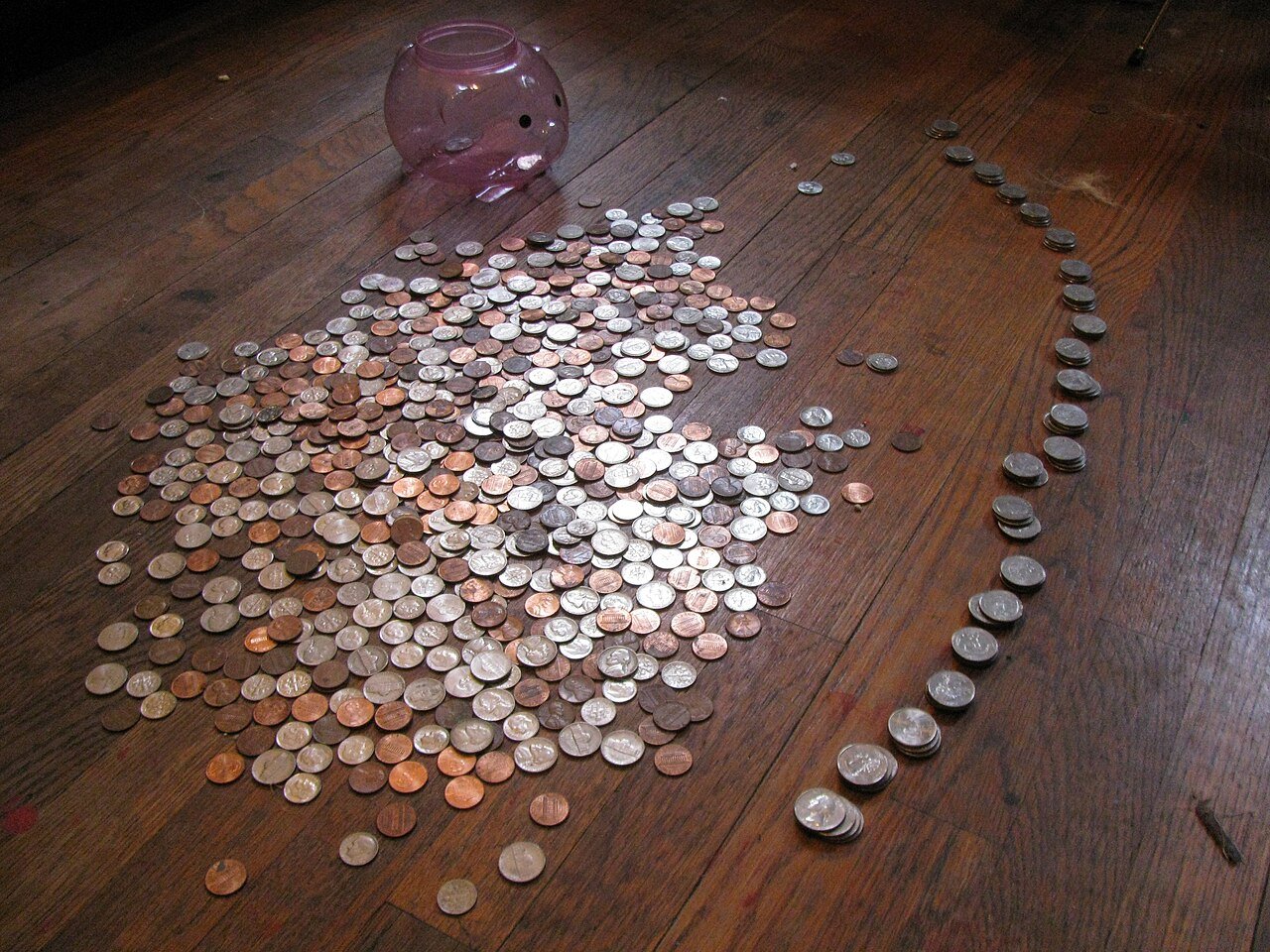
Featured image: an emptied piggy bank, Eden, Janine and Jim / Wikimedia Commons, CC BY 2.0.