Short answer: buying rounds etiquette comes down to one idea: if you drink in someone else’s round, you buy one round back before you leave. In UK and Irish pubs (and in Australia, where it is called a “shout”), each person in a small group takes a turn paying for everyone’s drinks. In the US, rounds are a friendly gesture rather than a system; most groups run their own tabs and tip the bartender about $1 to $2 per drink. If you can’t keep up, say so before the first round, not after the third.
How buying rounds works
A round is simple on paper. One person goes to the bar and buys a drink for everyone in the group. When glasses get low, the next person goes. The turns keep rotating until everyone has bought once, and then, if the evening continues, the cycle starts again. Nobody keeps a written score, but everyone notices if one person drinks four rounds and buys none.
The system grew out of pub culture in Britain and Ireland, where you order and pay at the bar rather than at the table. Carrying one tray of drinks back is easier than five people queuing separately, and the rotation means each person pays roughly the same over a full evening. It is less a rule than a social contract: you are trusted to take your turn, and the trust is what makes the evening feel generous instead of transactional.
Because the rotation only balances out over a whole cycle, the system has two built-in weak spots. The first is the early leaver who drank in two rounds and leaves before buying one. The second is the light drinker who sips one pint while everyone else has three, then buys a round of six expensive drinks. Most of the etiquette below exists to handle those two situations fairly. If you’re abroad somewhere with table service instead, our guide to asking for the bill in different languages has the phrases for the bill and for paying separately.
Rounds vs. treating vs. going Dutch
It helps to separate three ideas that people often blur together:
- A round is reciprocal. You pay now, others pay later in the same session, and over a cycle it evens out.
- A treat is one-way. Someone says “this one’s on me” for a birthday, a promotion or a thank-you, and nobody is expected to buy back.
- Going Dutch means everyone pays for exactly what they had, usually at the end of the night or drink by drink.
Confusion starts when one person thinks they are in a round system and another thinks everyone is paying their own way. The fix is to say which system you are using at the start, which is easier than it sounds (scripts below).
Buying rounds etiquette by country
Customs vary by group, age and city, so treat this table as common practice rather than law. It summarizes how groups of friends or colleagues usually handle drinks in each place.
| Country | Who usually pays | Round culture | Splitting norm / alternative | Tipping / service |
|---|---|---|---|---|
| Ireland | Each person in turn | Strong; small groups rotate rounds, big groups break into smaller “round circles” | Opting out early, or each buying their own | Not expected at the bar; appreciated for table service |
| United Kingdom | Each person in turn | Strong in pubs with bar service | “Kitty” (pooled cash) or each buying their own | Not expected at the bar; see service charge rules for table service |
| Australia / New Zealand | Each person “shouts” in turn | Common but not compulsory; “it’s my shout” | Own drinks, especially among younger drinkers | Not expected |
| United States | Each person, own tab | Occasional gesture (“next round’s on me”) | Separate tabs or one tab split at the end | About $1–$2 per drink or 15–20% of the tab |
| Canada | Each person, own tab | Occasional gesture, similar to the US | Separate bills are routine | Tipping expected, similar to the US |
| Germany | Each person, own drinks | A treat on occasions (someone “gibt eine Runde aus”) | Server asks “zusammen oder getrennt?” and splits at the table | Round up or add about 5–10% |
| Japan | The group, split evenly | Rare; drinks often ordered for the table | Warikan (even split), often collected by the organizer | No tipping |
Last checked October 2026. Tipping figures are common guidance, not fixed rules; local practice varies.
The biggest difference is between bar-service cultures (Ireland, the UK, Australia), where rounds solve a practical problem, and table-service cultures (Germany, Japan, much of continental Europe), where a server brings drinks and the question becomes how to split the final bill. For the German table-side ritual in detail, see our guide to splitting the bill in Germany.
Ireland and the UK
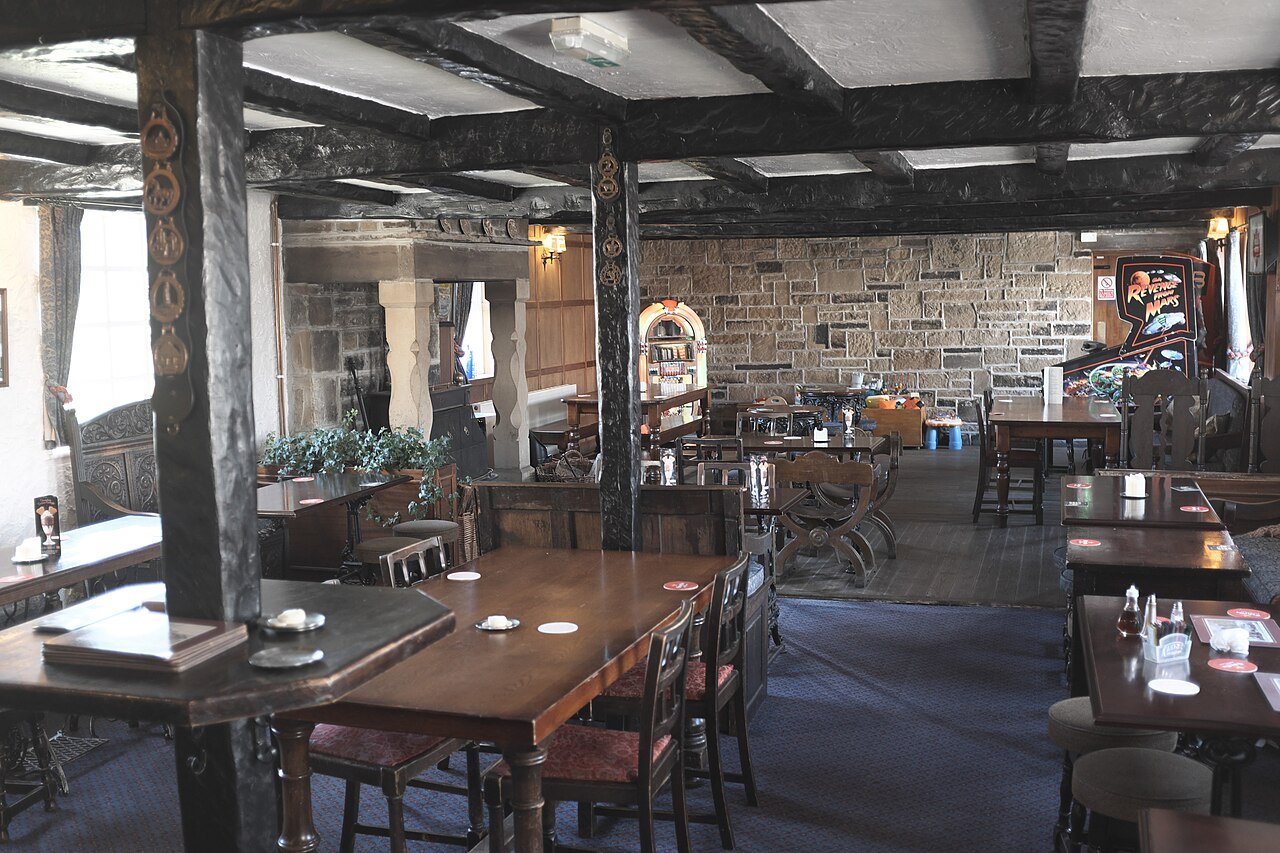
Irish and British pubs are the home of the round. In a group of three to five, rounds are the default, and accepting a drink without buying one back later is widely seen as poor form. Irish pub guides, such as IrishCentral’s beginner’s guide to the round system, agree on the core point: take your turn, and if you are not going to, say so at the start. In large groups, rounds become unaffordable, so people naturally split off into smaller circles of two or three who buy for each other. Nobody expects you to buy for twelve people.
Dating has its own logic in Britain, separate from group rounds. If you are meeting one person rather than a group, our guide on who pays on a date in the UK covers how couples usually handle a drink or dinner.

Australia and New Zealand: the “shout”
In Australian English, to “shout” means to pay for someone else, and “it’s my shout” means it’s my turn to buy the round. The shout works like a British round: one person buys for the group, the next takes the following turn. It is common but not compulsory, and writers and money guides in Australia have noted that younger drinkers are more likely to pay for their own. Leaving before your shout is still considered bad form in many groups.
United States and Canada
North American bars run on tabs and table service far more than British pubs do, so the round is a gesture rather than a system. Someone might say “next round’s on me” to celebrate a new job, and the group appreciates it, but nobody expects a strict rotation. The default is that each person pays for their own drinks, either one at a time or by closing their own tab at the end.
Germany and Japan
In Germany, groups usually order individually and pay their own share at the end, and the server routinely asks whether you are paying together or separately. Buying a round (“eine Runde ausgeben” or, informally, “eine Runde schmeißen”) happens, but it reads as a treat for an occasion, such as a birthday, rather than an obligation. In Japan, groups at an izakaya often order drinks and shared dishes for the table and split the total evenly at the end, a practice called warikan. The organizer frequently collects everyone’s share; senior colleagues sometimes pay a bigger share at work drinks.
The unwritten rules of a round
These are the habits that keep rounds fair. None of them is written down anywhere official, but they come up again and again in pub etiquette guides and in conversation with anyone who drinks in a round culture.

1. Buy your round before you leave
The cardinal rule. If you have drunk in other people’s rounds, buy one before you go home. If you know you have to leave early, buy the first round. Going first is the classic move for anyone with a train to catch, because nobody can accuse you of skipping out.
2. Match the round to the group, not to your wallet
When it is your turn, you buy what each person is drinking. You don’t downgrade everyone to the cheapest beer because it’s your money. The flip side: when someone else is buying, don’t suddenly order a premium double you would never buy for yourself. Stick roughly to what you have been drinking.
3. Keep the circle small
Rounds work best in groups of three to five. With eight or more people, a single round can cost as much as a meal, and the cycle never finishes before closing time. It is completely normal to say “let’s do rounds just the three of us” or to switch to a kitty.
4. Non-drinkers still count
If you are not drinking alcohol, you can still join a round: you buy drinks for others on your turn and take a soft drink when others buy. If that feels unfair because your soda costs a fraction of their cocktails, it is perfectly fine to opt out and buy your own. Pressure to drink alcohol, or to drink faster to “keep up with the round”, is not etiquette; it is bad hosting.
5. Pace yourself
Rounds can quietly speed up drinking, because the group moves at the pace of the fastest drinker. You can skip a round (“I’m fine for this one, thanks”) and nobody should mind. Drinking responsibly is always more important than the rotation, and nobody is obliged to drink at all.
6. Don’t keep loud score
Everyone keeps a mental tally, but announcing it (“you owe me two”) kills the mood. If the cycle ends uneven, the next night out usually balances it, or the person who bought less offers the first round next time.
Alternatives: kitty, own tab, separate checks
Rounds are not the only fair system, and in many groups they are not the best one. Here is how the main alternatives compare.
| System | How it works | Best for | Watch out for |
|---|---|---|---|
| Rounds | Each person buys for the group in turn | Small groups, similar drinks, bar service | Early leavers, light vs. heavy drinkers |
| Kitty | Everyone puts the same amount in a pot; one person buys from it | Groups of 5+, a planned night out | Topping up fairly; who keeps the leftover |
| Own drinks | Each person orders and pays individually | Mixed budgets, non-drinkers, new acquaintances | Slower bar queues |
| One tab, split at the end | One card on the tab, total divided later | US/Canada table service | Uneven orders; settle by item if needed |
| Separate checks | Server splits at the table | Germany, many US restaurants | Ask early on busy nights |
A kitty is the go-to for bigger groups. Everyone contributes the same amount (say $20 each), one trusted person holds it and buys from it, and when it runs out you either top up or call it a night. It removes the “whose turn is it” problem entirely. If one person settles a shared tab by card, a money-transfer request afterwards is fine as long as the amounts were agreed; our guide to whether it’s rude to Venmo-request a friend covers how to send it without awkwardness.
Rounds and tabs in US bars
American bar etiquette adds a layer that British and Irish pubs mostly don’t have: tipping. The Emily Post Institute’s tipping guide suggests about $1 to $2 per drink for a bartender, and many people tip 15% to 20% of the total when they close a tab, especially for cocktails. So when you buy a round of four drinks in a US bar, plan on roughly $4 to $8 of tip on top.
A few practical habits keep things smooth:
- Say “it’s on my tab” when you buy a round, so the bartender doesn’t open separate tabs for each drink.
- Tip on the round you buy. The person paying for the round tips on it; you don’t leave the tip to whoever buys next.
- Close out before you leave. An open tab with your card behind the bar is a hassle for everyone.
- Splitting one tab? Agree up front whether it is an even split or by item. If drinks differ a lot in price, splitting by item is fairer.
In the UK, by contrast, tipping at the bar is not expected. For when a tip or service charge does apply over there, see our guide to tipping in the UK.
Scripts for opting out or proposing a kitty
Most round awkwardness comes from not saying anything. These lines are short, friendly and easy to deliver before the first drink arrives.
Opting out of rounds
- “I’m going to sit out of rounds this time and just get my own, I’m taking it slow.”
- “I’m only staying for one or two, so I’ll get my own, no round for me.”
- “I’m on soft drinks, so count me out of the round. You guys go ahead.”
- “Money’s tight this month, so I’ll buy my own drinks. Happy to get the first one for you, though.”
When you have to leave early
- “I’ve got an early start, so let me get the first round.”
- “I’m heading off after this one. Let me grab this round before I go.”
Proposing a kitty
- “There are eight of us, rounds will take forever. How about $20 each in a kitty and we see how far it goes?”
- “Let’s do a kitty. I’ll hold it and keep the receipts, and we split whatever’s left at the end.”
When someone skips their round
- Lightly, in the moment: “Whose round is it? I think it’s yours, Sam!”
- If it keeps happening, privately: “Hey, next time shall we just get our own drinks? It’s easier with different budgets.”
Treating without starting a round
- “This one’s on me to celebrate, no need to buy back.”
- “This round is my birthday treat, then we’re back to our own tabs.”
Meeting new people for drinks? Pick a busy public bar, tell a friend where you’ll be, keep your own way home sorted, watch your drink, and leave if anything feels off. Nobody is owed a round, a drink or your company.
Say who pays before anyone orders
The pattern behind every scenario here is the same: rounds, kitties and tabs all work well when the group agrees on the system at the start. They go wrong when people assume. So whether you are planning a pub night, a happy hour or drinks with a new group, decide the payment style in the invitation: rounds, kitty, pay your own, or “first round is on me”. Our guide to who pays at a meetup covers the same principle for group events with people you don’t know well.
Want to turn this into an actual plan? MeetNow is a free app for meeting people in person: a host posts a plan at a public place, says who pays (host pays, split, pay your own or free) and picks who joins. It is live on the web and works in your browser, starting in Malta: open MeetNow and see the plans posted in Malta.
Frequently asked questions (FAQ)
Is it rude not to buy a round?
In UK, Irish and Australian pubs, drinking in other people’s rounds and then leaving without buying one is considered rude. Not joining the round in the first place is fine, as long as you say so early and buy your own drinks.
How many people should be in a round?
Three to five is the sweet spot. Bigger groups usually split into smaller round circles or switch to a kitty, because a single round for eight or ten people gets expensive and the rotation never finishes.
Do you have to buy a round if you don’t drink alcohol?
No. You can join and take soft drinks when others buy, or opt out and buy your own. If you do join, you buy whatever the others are drinking on your turn, which is why many non-drinkers prefer to opt out.
What does “my shout” mean?
It’s Australian and New Zealand slang (also heard in the UK) for “it’s my turn to pay”. A shout is a round: the person shouting buys drinks for the group.
Do you tip when buying a round in the US?
Yes. The person buying the round tips on it, typically around $1 to $2 per drink or 15% to 20% of the round. In the UK and Ireland, tipping at the bar is not expected.
What is a kitty at the pub?
A kitty is a shared pot of cash. Everyone puts in the same amount, one person buys drinks from it, and the group tops it up or stops when it runs out. It’s the simplest fair system for bigger groups.
Featured image: pub fireplace, Bob Harvey / Wikimedia Commons, CC BY-SA 2.0.