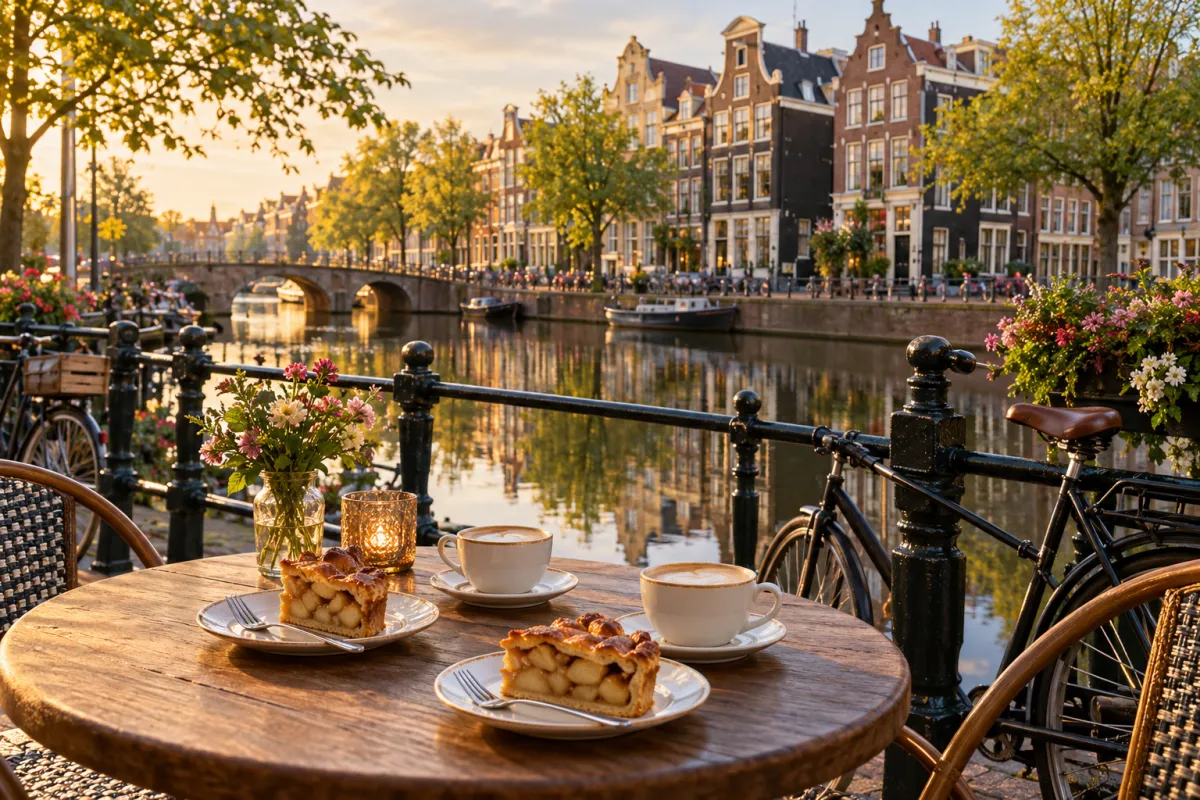
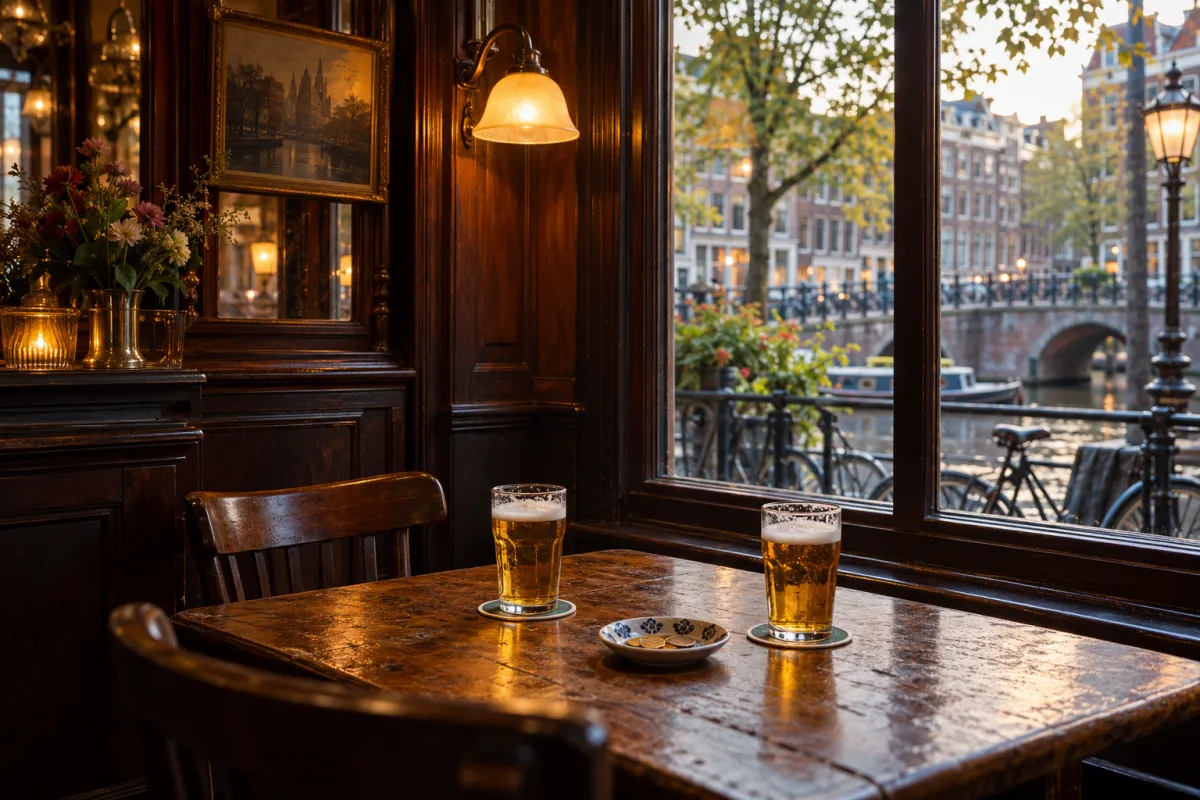
In a Dutch café, the server may ask “Samen of apart?” (together or separate?) before you have even reached for your wallet. That one question captures most of what you need to know about who pays on a date in the Netherlands: splitting is a normal, neutral option, not an awkward negotiation or a sign that the date is going badly.
For travelers and expats from the US and Canada, this can feel unfamiliar. Back home, many people still assume the person who asked, or the man in a straight couple, picks up the first-date check. In the Netherlands, that expectation is much weaker. Paying your own share is often read as respect for equality and independence. Offering to treat is still welcome, as long as you do it lightly and accept a no gracefully.
Below you will find a clear verdict, how the bill works at a Dutch café or restaurant, the phrases to use, a comparison table of bill paying customs around the world, a short section on how to split the bill in France, and ready-to-use scripts.
Who pays on a date in the Netherlands: the verdict
The short version: split by default, treat by invitation. Here is how that plays out in practice.
- Splitting is socially neutral. Suggesting you each pay your share on a first date is not stingy or cold. Many Dutch daters actually prefer it because it keeps things balanced and pressure-free.
- The inviter can offer to pay. If you asked someone out, especially for coffee or a drink, offering to cover it is a kind gesture. Expect a counter-offer to split, and do not treat that as rejection.
- Gender roles matter less than in many places. The idea that the man should pay is less common than in much of North America, though some people, depending on their family background or personal values, still appreciate or expect it.
- Alternating is very common. One person pays for the first round of drinks, the other gets the second, or one covers dinner and the other covers dessert or the next date.
- Being direct is fine. Asking “Shall we split?” in a plain, friendly tone is perfectly acceptable. Vague hinting tends to create more awkwardness than a clear question.
Rule of thumb: If you invited, offer once, clearly and warmly. If your date says they would rather split, accept with a smile and move on. Insisting three times can come across as dismissing their independence.
Why splitting feels normal to many Dutch daters
Several cultural threads explain why splitting is so unremarkable in the Netherlands, without falling into the old cliché that the Dutch are simply frugal.
Equality and independence
Dutch social life tends to value equal footing between people. Paying your own way on a date signals that you are both there because you want to be, not because one person is hosting the other. For many people, it removes any sense of owing something afterward.
Direct communication
Dutch culture is often described as direct: people tend to say what they mean. That applies to money too. Talking about the bill openly is not considered tacky, so there is less of the silent wallet dance that happens elsewhere.
The “going Dutch” myth
The English expression “going Dutch” is not really a Dutch phrase, and its origins are often traced to old English-Dutch rivalry rather than to modern Dutch dating habits. In Dutch, people are more likely to say they will each pay for themselves or split the bill; our guide to asking for the bill in different languages has the equivalent phrases for other countries.
Not everyone follows the same script
The Netherlands is diverse. Age, city, religion and family background all shape expectations. Some families and communities bring hosting traditions where the person who invites covers the meal as a matter of hospitality. Treat the general norm as a starting point, then read the person in front of you.
How the bill actually works in Dutch cafés and restaurants
You usually have to ask for it
Servers in the Netherlands generally will not drop the check on your table the moment you finish eating. Lingering is normal, so the bill tends to arrive only when you ask. Catch your server’s eye and say “Mag ik afrekenen?” (May I settle up?) or simply “De rekening, alstublieft.” In a traditional brown café, you may pay at the bar instead of at the table.
Card first, cash optional
Paying by card or contactless is the everyday norm, and some places do not take cash at all. When you ask to pay separately, the server usually brings the card terminal to the table and each of you pays your part. You can split evenly or tell the server what you each had. Either is fine.
The payment request afterward
Among friends, one person often pays the whole bill and then sends a payment request through a banking or payment app, with Tikkie being a well-known example. On a first date, though, settling at the table usually feels smoother than sending a request later, which can come across as a little transactional. By the third or fourth date, it may feel completely natural.
Tipping is modest
Menu prices in the Netherlands generally already include service, and staff are not relying on tips the way servers in the US and Canada often are. A tip is a thank-you, not an obligation. Rounding up or leaving a small extra for good service is common; saying “Laat maar zitten” (keep the change) works when paying in cash. If you are used to North American tipping math, do not apply it automatically here. For a contrast with a nearby country that has a similar “together or separate” habit, see our guide to splitting the bill in Germany.
Common date scenarios and what to do
Coffee or a drink on a first date
This is the classic low-stakes Dutch first date. Either you each pay for your own drink, or the person who suggested it covers both. The amount is small, so do not overthink it. If they pay this time, offer to get the next one.
Dinner where your date invited you
Offer to split when the bill comes. If your date says it is their treat, thank them sincerely and suggest you cover something next time, like drinks afterward or your next meet-up. That keeps things balanced without a tug-of-war at the table.
Dinner where you invited them
Say it up front if you want to pay: “I’d love to take you to this place, my treat.” Clarity at the invitation stage prevents confusion at the end. Our guide on how to offer to pay politely has more wording options.
Second, third and later dates
Alternating becomes the norm: one person covers dinner, the other the next outing, or you keep splitting. Couples who date for a while often settle into whatever rhythm feels fair to both, sometimes adjusting if one person earns noticeably more.
When budgets differ
If one of you is a student or on a tight budget, suggest a cheaper format: a walk followed by coffee, a picnic, a museum visit or a casual eatery. Being honest about budget is very much in keeping with Dutch directness. For realistic spending ranges and ideas, see how much to spend on a first date.
Dutch phrases for asking for the bill
Most people in the Netherlands speak excellent English, so you will not be stuck. Still, a few Dutch words are friendly and appreciated.
| Dutch phrase | Meaning | When to use it |
|---|---|---|
| De rekening, alstublieft. | The bill, please. | Any café or restaurant |
| Mag ik afrekenen? / Mogen wij afrekenen? | May I / may we settle up? | When you are ready to pay |
| Samen of apart? | Together or separate? | What the server may ask you |
| Apart, graag. | Separately, please. | Answering the server |
| Kunnen we apart betalen? | Can we pay separately? | Asking to split |
| Kan ik pinnen? | Can I pay by card? | Checking payment options |
| Ik trakteer. | It’s my treat. | Offering to pay |
| Laat maar zitten. | Keep the change. | Leaving a small cash tip |
Bill paying customs around the world: comparison table
The Dutch approach makes more sense when you see it next to other countries. These are general tendencies, not rules, and individual people always vary.
| Country | Who usually pays on a date | Splitting norm | Tipping / service |
|---|---|---|---|
| Netherlands | Often split; inviter may offer | Very common, even on first dates | Service generally included; small optional tip |
| United States | Inviter often pays on a first date; many couples split | Common later; increasingly accepted early | Tip expected and a real part of the cost |
| Canada | Similar to the US; inviter often pays first | Common, especially among younger daters | Tip expected, similar to the US |
| United Kingdom | Mixed; splitting or inviter pays | Widely accepted | Discretionary service charge sometimes added; check the bill |
| France | Inviter often pays; splitting common among younger people | Often an even split rather than itemized | Service included; small extra optional |
| Germany | Often split; inviter may treat | Server asks together or separate | Round up or add a little; tell the server the total |
| Italy | Inviter often pays on early dates | Even split (alla romana) common among friends | Cover charge may appear; tipping modest |
| Spain | Mixed; one person may pay and the other gets the next round | Splitting (a medias) widely accepted | Modest; rounding up is common |
| Japan | Mixed; inviter or splitting | Splitting (warikan) is normal | No tipping |
| South Korea | Inviter or older person often pays; couples may alternate | Splitting increasingly common among younger people | No tipping customary |
Notice how close the Netherlands sits to Germany and Japan on splitting, and how different it feels from North America, where tipping adds another layer to the bill. If you are comparing English-speaking countries, our article on who pays on a date in the UK versus the US goes deeper.
How to split the bill in France
Many travelers combine the Netherlands with France, and the two feel quite different at the end of a meal. Here is how to split the bill in France without friction.
- Expect a more traditional first date. In France, the person who invites often pays, and the phrase “C’est moi qui t’invite” (I’m treating you) signals exactly that. Splitting is common too, especially among younger people and students.
- An even split is easier than itemizing. French couples and friends often divide the total down the middle rather than calculating who had what. You can suggest “On partage ?” (Shall we split it?).
- Ask politely about separate payments. Use “L’addition, s’il vous plaît” for the bill and “Est-ce qu’on peut payer séparément ?” to ask if you can pay separately. Many places will happily take two cards; for larger groups, some restaurants prefer fewer payments, so one person paying and others reimbursing can be simpler.
- Tipping is light. Menu prices typically include service. Leaving a little extra for good service is a nice touch, not an obligation.
Compared with France, the Netherlands is more matter-of-fact about splitting on a first date, while France leans a bit more toward the inviter treating. Both are relaxed compared with the North American tipping calculation.
Scripts for North Americans dating in the Netherlands
These lines work in English, which most Dutch daters speak comfortably. Adjust the tone to fit you.
When you want to split
- “Shall we just split it?”
- “Want to each get our own? That works for me.”
- “Apart, graag,” said to the server, followed by a smile at your date.
When you want to treat
- “I asked you out, so let me get this one.”
- “My treat this time. You can get the next coffee if you like.”
- “Ik trakteer!” (a friendly bit of Dutch that usually lands well)
When your date offers to pay
- “That’s really kind, thank you. Next one’s on me.”
- “Are you sure? I’m happy to split.” If they say yes, let it go.
When your date insists on splitting but you wanted to pay
- “Of course, let’s split. I’ll get drinks next time, then.”
For more wording across all kinds of situations, see how to ask to split the bill. The main point is to be clear early and gracious at the end.
Meeting someone new: safety basics
Wherever you are dating, a few habits keep first meetings relaxed and safe:
- Meet in a public place. A busy café, a restaurant or a museum is ideal for a first meeting.
- Tell a friend. Share where you are going and who you are meeting.
- Arrange your own way home. Know your transport options in advance so you never depend on your date for a ride.
- Leave if you feel uncomfortable. You do not owe anyone your time. Paying your own share, which is so normal in the Netherlands, also makes it easy to leave whenever you want.
Want to turn this into an actual plan? MeetNow is a free app for meeting people in person: a host posts a plan at a public place, says who pays (host pays, split, pay your own or free) and picks who joins. It is live on the web and works in your browser, starting in Malta. The Android app is on Google Play; the iPhone app is not in the App Store yet. Open MeetNow and see the plans posted in Malta.
FAQ
Is it rude to split the bill on a first date in the Netherlands?
No. Splitting the bill on a first date is common in the Netherlands and generally seen as fair and respectful. Many Dutch daters prefer it because it keeps things balanced. If you invited and want to pay, you can offer, but accept graciously if your date would rather split.
Should I tip on a date in the Netherlands?
Tipping is optional and modest. Service is generally included in menu prices, so a tip is a thank-you rather than an obligation. Rounding up or leaving a small extra for good service is common, and you should not apply North American tipping amounts automatically.
Do Dutch people actually say “going Dutch”?
Not really. Going Dutch is an English expression, often traced to old English-Dutch rivalry rather than to modern Dutch habits. In Dutch, people simply say they will pay separately or split the bill, and a server may ask whether you are paying together or separately.
What if my Dutch date insists on splitting but I want to pay?
Go along with the split. Insisting repeatedly can feel like you are dismissing their independence. A warm line like “Of course, let’s split, and I’ll get drinks next time” keeps things friendly and gives you a natural reason to plan a second date.
How do you split the bill in France on a date?
In France, the person who invites often pays, but splitting is common, especially among younger people. An even split is usually easier than itemizing. Ask for the bill with “L’addition, s’il vous plaît” and ask “Est-ce qu’on peut payer séparément ?” if you want to pay separately. Service is typically included, so any tip is a small optional extra.