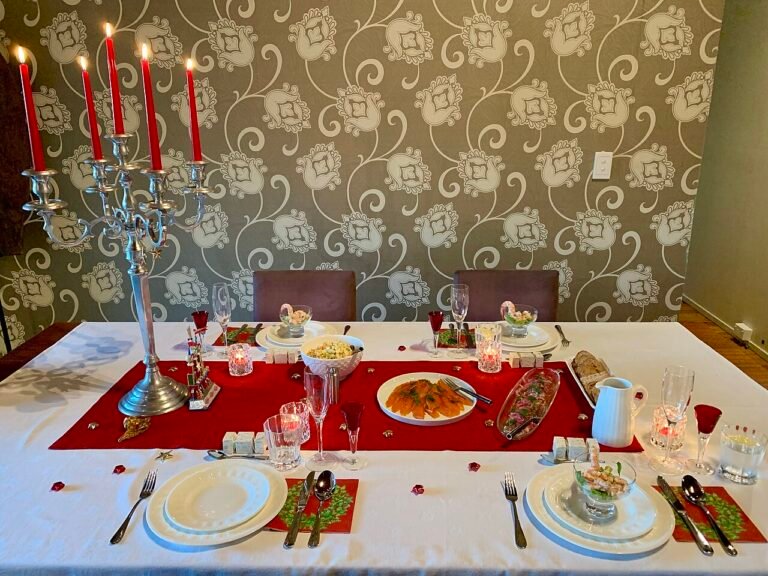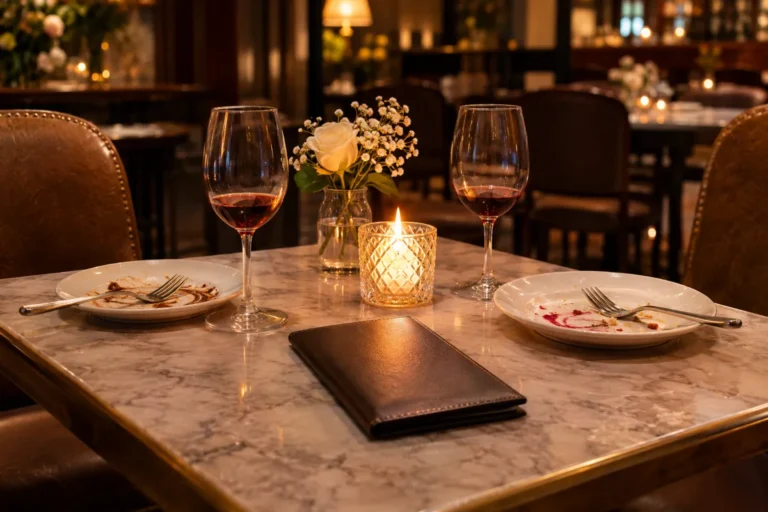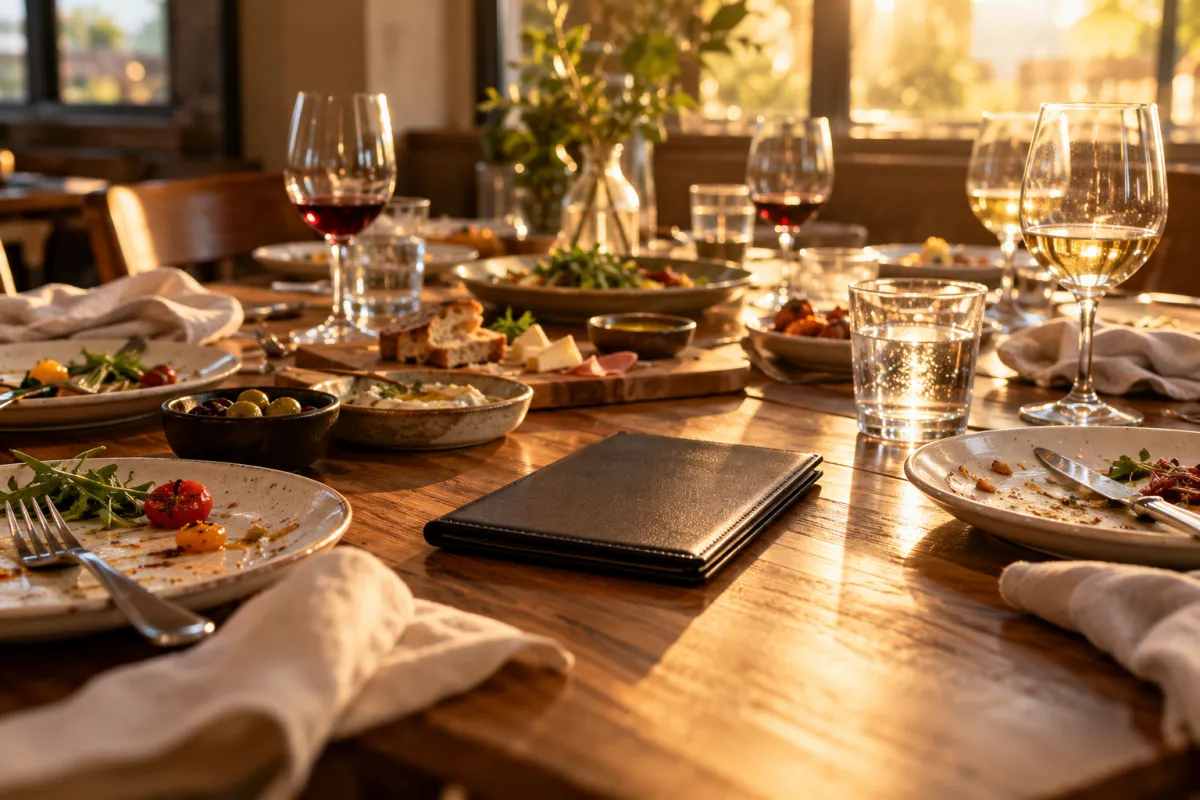
If you’re wondering who pays on a date in Sweden, the most common answer is refreshingly simple: you both do. Swedes typically split the bill or each pay for what they ordered. A first date is just as likely to be a coffee and a cinnamon bun as a three-course dinner. If you grew up with the ‘whoever asked pays’ rule, or the lingering expectation that the man picks up the check, that can feel abrupt at first. For many people it then becomes quietly liberating.
This guide gives you the verdict first, then the nuance. It covers why splitting is the default, how the fika first date works, and when couples start taking turns. It also explains how Swish settles a bill to the exact krona and which Swedish phrases to use when the server comes over. One table shows how Sweden compares with the US, Canada, Germany, Brazil and a few other countries.
One caveat before we start. These are broad social norms, not rules every Swede follows. Couples, families and friend groups all have their own habits, and the kindest move in any country is to ask rather than assume.
Who pays on a date in Sweden: the short answer
In Swedish dating culture, splitting the bill or paying for your own share is standard practice. Guides to the culture call this dela nota, which means splitting the bill (Routes North). The official country portal describes splitting expenses and taking turns asking someone out for a fika as normal practice that reflects a society built on equal footing (sweden.se). Here is how that plays out in each situation:
- First date: usually a fika (coffee and something sweet), and each person pays for their own order.
- Dinner date: split evenly or pay separately. Offer to split even if you were the one who asked.
- Dating regularly: take turns covering outings without keeping a strict tally.
- Treating someone: fine, but say so clearly and early, ideally when you invite them.
- Group outings: separate bills, or everyone sends their share to whoever paid with a card.
The biggest adjustment for visitors is not the splitting itself. It is that paying for someone does not automatically signal romantic interest, and insisting on paying can land badly.
Why Swedes split: equality, independence, pragmatism
Swedish norms on who pays are often linked to three values: gender equality, independence and pragmatism (Routes North). Each one shapes the bill in a slightly different way.
Gender equality
The old script in which the man pays because he is the man is largely absent in Sweden. Many people find it uncomfortable when someone insists on paying because of gender, and some read it as patronizing, as if the other person can’t cover a coffee. That doesn’t mean a generous gesture is rude. It means the gesture should come from generosity, not from a role. The same rule applies to everyone, including same-sex couples and anyone who doesn’t follow traditional gender roles.
Financial independence
Paying your own way is a quiet statement that you are on the date because you want to be there, not because you owe anything. That cuts both ways. Nobody feels they have to ‘repay’ a dinner with a second date, affection or anything else. Many people find that removing the transactional undertone makes early dating feel more honest.
Pragmatism
Splitting is simply easy. Nobody has to guess what the other person expects, nobody gets stuck with a large bill, and the end of the meal doesn’t turn into a polite tug-of-war over the check. If you need the words for paying separately in other countries too, see our guide to asking for the bill in different languages.
Key mindset shift: in the US, picking up the check is often one of the main ways to show interest. In Sweden, you show interest through attention, a well-chosen place, good conversation and a clear ‘I’d like to see you again.’ Your wallet doesn’t need to do the talking.
The fika first date: low stakes, pay your own
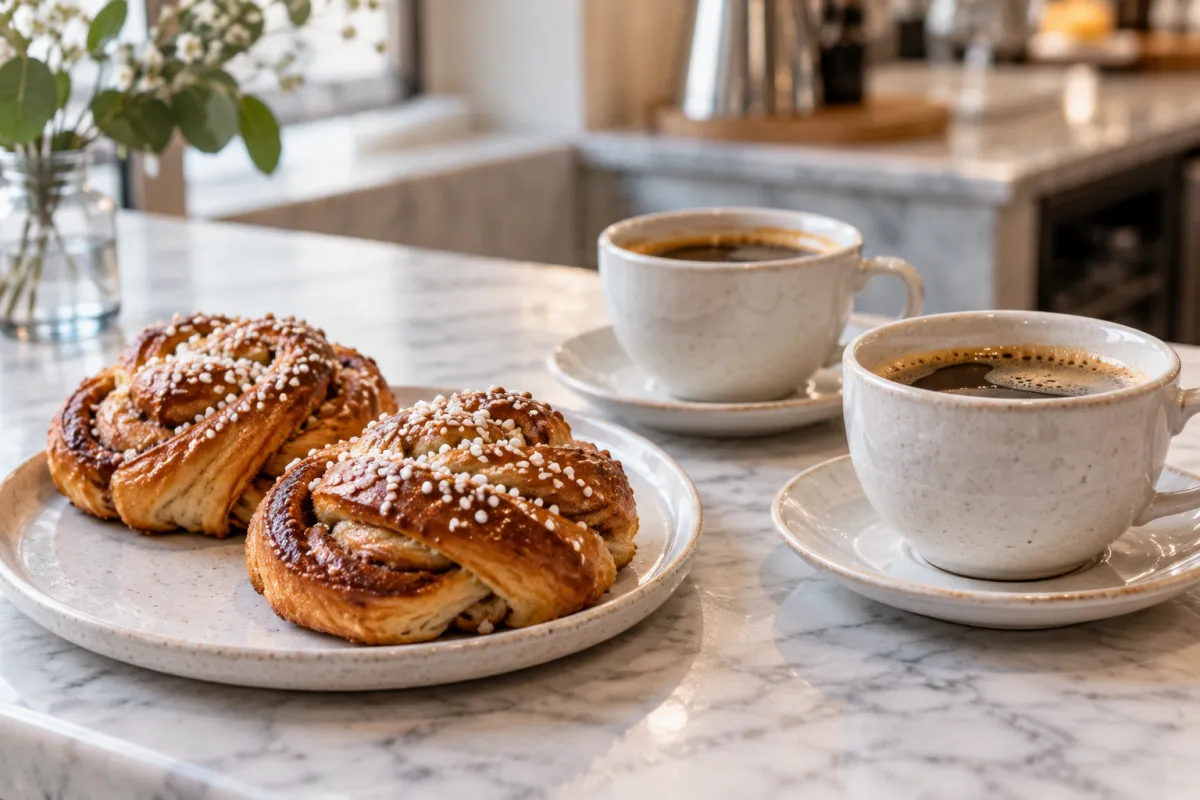
If you take one thing from this guide about who pays on a date in Sweden, make it this: the first date is often a fika. Fika is the Swedish coffee break, usually coffee or tea with a pastry such as a cinnamon or cardamom bun. As a first date it is low-pressure, easy to keep short, and cheap enough that the question of who pays barely comes up.
The etiquette is simple. Each person orders and pays for their own coffee and pastry. At many cafés you order at the counter, so you’ll often have paid before you even sit down. Nobody is left wondering whether to reach for the check, because there isn’t one.
Why it works:
- It’s short by design. If the conversation flows, you can suggest a walk or a second coffee. If it doesn’t, you can say goodbye after one cup without any awkwardness.
- Nobody overspends. A fika keeps the stakes low for both people, a principle we cover in our guide to realistic first date budgets.
- Either person can ask. Inviting someone for a fika is not tied to gender, and taking turns asking is part of the norm (sweden.se).
If you’d like to treat your date to their coffee, you can. Keep it light: ‘Let me get these, you can get the next round.’ If they say they’d rather pay for their own, accept that without pushing back.
Dinner dates and later dates: taking turns
Dinner dates still happen, especially from the second or third date on. At a sit-down restaurant, couples usually do one of the following:
- Split evenly: the total is divided in half. This is the easiest option when you ordered similar things.
- Pay for your own: each person covers what they ordered. This makes sense when one of you had a steak and wine and the other had a salad and water.
- One pays, the other settles up by phone: one person pays with a card and the other sends their share via Swish.
When you’re dating regularly
Once a couple is seeing each other regularly, taking turns is common. One person covers this dinner and the other covers the next, or one pays for the movie and the other for the drinks afterward. Nobody keeps a spreadsheet. The idea is that it evens out over time, and both people contribute in roughly equal measure.
Where incomes differ a lot, many couples adjust openly. The person who earns more might cover pricier outings, while the other suggests cheaper plans or cooks at home. What matters is that you talk about it instead of building up silent resentment, and Swedish directness makes that conversation easier than it might be elsewhere.
If your date insists on paying
Sometimes a Swede will want to treat you, particularly if they asked you out for a special occasion. Accept gracefully with ‘Thank you, that’s really kind’ and offer to pay next time. Fighting over the bill is not part of the culture, and a sincere thank-you plus a return gesture is enough.
Swish and the mechanics of splitting
Splitting in Sweden goes smoothly partly because of Swish, the mobile payment system used across the country. It makes splitting a restaurant bill, a taxi or a coffee down to the exact krona effortless and instant (Swish). In practice, one person often pays the whole bill with a card and everyone else sends their share to that person’s phone before leaving the table, or shortly after.
This changes the way the end of a meal feels. There’s no counting cash and no ‘I’ll get you back later’ that never happens. Nobody has to calculate who owes what for the next week. For dates, it also means ‘Let’s split’ takes about ten seconds to act on.
Visiting from the US or Canada? Swish generally works through Swedish bank accounts, so as a visitor you may not be able to use it. The easy fallback is to ask the server to split the bill so each of you pays with your own card. Restaurants in Sweden are used to this request.
If you’re splitting a larger group bill at home in North America, a dedicated app can do the same job. Our guide on how to ask to split the bill includes scripts for raising the topic before anyone orders.
Group dinners, birthdays and work outings
The splitting norm doesn’t stop at dating. In group dinners, work outings and birthday meals, people generally expect separate bills or Swish transfers to whoever paid with a card, unless the organizer says otherwise.
- Friends’ dinners: pay for what you had, or split evenly if everyone ordered similarly. Speak up early if you only want a main course and water.
- Birthday dinners: unless the host has said ‘I’m treating everyone,’ assume you pay your own way. Friends sometimes chip in together for the guest of honor’s meal, but that is arranged in advance, not assumed at the table.
- Work dinners: if the company or a manager is paying, it will normally be stated clearly. If nothing has been said, be ready to pay your share.
The common thread is clarity. The host states the deal up front, and everyone else follows it. That habit works well anywhere, including in North America, where unclear expectations are the main cause of awkward moments when the bill arrives.
Swedish phrases to ask for the bill
Most Swedes speak English well, and you can handle any restaurant in English. Still, a few Swedish phrases are a friendly touch on a date.
| Swedish phrase | English meaning | When to use it |
|---|---|---|
| Kan vi få notan, tack? | Can we have the bill, please? | Signaling the server at the end of a meal |
| Kan vi betala var för sig? | Can we pay separately? | Asking for separate payments |
| Ska vi dela? | Shall we split? | Checking with your date before the bill comes |
| Vi delar på notan. | We’re splitting the bill. | Telling the server how you’ll pay |
| Jag bjuder. | It’s on me. | Offering to treat, ideally when you invite |
| Nästa gång bjuder jag. | Next time is on me. | Accepting a treat and offering one back |
| Jag swishar dig. | I’ll Swish you. | Sending your share to whoever paid |
| Tack för sällskapet! | Thanks for the company! | A warm goodbye after the date |
Sweden vs other countries: comparison table
To put the Swedish norm in context, here is how bill customs on dates and among friends compare across several countries. Treat these as general tendencies. Individual people, cities and generations vary.
| Country | Who usually pays (dates) | Splitting norm | Tipping / service |
|---|---|---|---|
| Sweden | Both; split or pay your own | Default; Swish settles exact shares | Not expected the North American way; rounding up for good service is a friendly extra |
| United States | Often whoever asked, or offers are made; splitting is increasingly common | Common among friends; separate checks are widely accepted | Tip expected for table service |
| Canada | Similar to the US; whoever invited often offers | Common among friends | Tip expected for table service |
| United Kingdom | Mixed; splitting is increasingly normal | Common, often split evenly | Check the bill for a service charge before tipping |
| Germany | Splitting is common; the inviter may offer | Very normal; servers often ask ‘together or separate?’ | Round up or add a modest tip, told to the server when paying |
| Brazil | More traditional expectations persist in some circles | Common among friends (‘rachar a conta’) | A service line often appears on the bill; read it first |
| Japan | Varies; the inviter may cover more | Warikan (even split) is common among friends | No tipping |
Do Germans split the bill the same way?
If you’re asking ‘Do Germans split the bill?’, the answer is yes, and it’s built into the ritual. Servers in Germany often ask ‘Zusammen oder getrennt?’ (together or separate?) and then take payment from each person at the table. The difference from Sweden is mostly in the mechanics. Germany has a stronger tradition of paying at the table, sometimes in cash, and of telling the server the total including your tip. Sweden leans on cards and Swish. Our full guide to splitting the bill in Germany walks through the exact wording.
Brazilian restaurant bill etiquette: a useful contrast
Brazilian restaurant bill etiquette offers an interesting contrast with Sweden. Among friends, splitting the bill (‘rachar a conta’) is completely normal. On dates, though, more traditional expectations about one person paying can still come up in some circles, so it’s worth reading the situation or simply asking. Bills often include a service line, so check it before adding anything extra. If you’re moving between Brazil and Sweden, expect the Swedish date to be more explicit about splitting from the start.
Coming from the US or Canada
For North Americans, the two biggest adjustments are tipping and symbolism. In the US and Canada, the tip is a meaningful part of how servers are paid, so leaving one is non-negotiable for table service. In Sweden, the tip is a smaller courtesy. On the symbolic side, North Americans often read paying as a signal of interest or seriousness. In Sweden, splitting carries no negative signal at all. The UK sits somewhere in between, as our guide on who pays on a date in the UK compared with the US explains.
Scripts for North Americans dating in Sweden
Knowing who pays on a date in Sweden is one thing. Saying it smoothly is another. These lines work in English, and Swedes will appreciate the directness.
- Before ordering: ‘Shall we just split this? That’s easiest for me.’
- When you want to treat: ‘I’d love to get this one, my treat. You can get the next fika.’ Say it when you invite, not as the bill lands.
- When they offer to pay: ‘That’s really kind, thank you. Next one’s on me.’
- When you’d rather pay separately: ‘Let’s each pay for our own, if that works.’
- When your orders are uneven: ‘I had the wine and dessert, so let me cover a bit more.’
- When you can’t use Swish: ‘I don’t have Swish, so could we ask them to split it on two cards?’
One thing to avoid: insisting repeatedly after your date has said they’ll pay their own way. In North America that can come across as gallant. In Sweden it can suggest you don’t take their independence seriously. Offer once, warmly, and then follow their lead.
Meeting someone new: safety basics
Sweden’s pay-your-own norm is a real advantage when you’re meeting someone for the first time. It means you’re free to leave whenever you want. Pair it with the usual basics:
- Meet in a public place. A busy café is ideal, which is one reason the fika first date works so well.
- Tell a friend where you’re going and who you’re meeting.
- Arrange your own way home rather than relying on your date for a ride.
- Leave if you’re uncomfortable. You’ve already paid for your coffee, so you don’t owe anyone an explanation.
Want to turn this into an actual plan? MeetNow is a free app for meeting people in person: a host posts a plan at a public place, says who pays (host pays, split, pay your own or free) and picks who joins. It is live on the web and works in your browser, starting in Malta. The Android app is on Google Play; the iPhone app is not in the App Store yet. Open MeetNow and see the plans posted in Malta.
Frequently asked questions
Is it rude to offer to pay for a date in Sweden?
No. Offering once, warmly, is fine and often appreciated. What can come across badly is insisting after your date has said they’d rather pay their own share, or implying they should let you pay because of gender. Offer, accept their answer, and if they let you treat, expect them to return the gesture next time.
Should the man pay on a first date in Sweden?
Generally, no. Swedish dating culture puts a strong emphasis on gender equality and independence, so the expectation that a man pays is largely absent and can feel patronizing. Most first dates are a fika where each person pays for their own order, whoever made the invitation.
Do you tip on a date in Sweden?
Tipping is much less of a big deal in Sweden than in the US or Canada. It isn’t expected the way it is in North America, but rounding up or adding a little for good service at a sit-down restaurant is a friendly gesture. If you split the bill, you can each round up your own share.
What if I can’t use Swish as a visitor?
Swish generally works through Swedish bank accounts, so many visitors can’t use it. Just ask the server if you can pay separately, or say ‘Kan vi betala var för sig?’, and each pay with your own card. Restaurants in Sweden handle split payments routinely.
Who pays when a Swede invites you out?
Unless they say ‘Jag bjuder’ (it’s on me), assume you’ll split or pay your own way. Asking someone out in Sweden doesn’t automatically mean covering the bill. If they do treat you, thank them and offer to get the next one, which fits the common habit of taking turns.