The short answer
Tipping in Canada works much like the US: at a sit-down restaurant, 15–20% is the common range, usually calculated on the amount before tax. Bartenders, taxi and rideshare drivers, hairdressers, food delivery couriers and hotel staff are commonly tipped too; counter service and takeout are optional. In Quebec, the law has required since May 7, 2025 that suggested tip percentages on payment terminals be calculated before GST and QST. Tips are always voluntary, but in a full-service restaurant leaving nothing reads as a complaint about the service. Last checked November 2026.
Below: a service-by-service table, why tipping on the pre-tax amount matters and the sales tax in every province, Quebec’s rules, Canada vs the US, paying with US dollars, worked examples in Canadian dollars with US equivalents, and how to handle group bills.
Tipping in Canada: how much to tip, by service
These are common-practice ranges, not rules. Adjust for the quality of service and your budget. Last checked November 2026.
| Service | Typical tip | Notes |
|---|---|---|
| Sit-down restaurant | 15–20% of the pre-tax bill | 15% for good service, 18–20% for very good service |
| Bar, table service | 15–20% | Same as a restaurant |
| Bar, ordering at the counter | About $1–2 per drink, or 15% | On a tab, tip on the total at the end |
| Coffee shop, counter service | Optional | Rounding up or the tip jar is a kind extra, not expected |
| Takeout | Optional | Many people skip it; 5–10% for a big, complicated order |
| Food delivery | About 10–15%, minimum a few dollars | More in bad weather or for long distances |
| Taxi and rideshare | About 10–15% | Round up for short trips; tip in the app for rideshare |
| Hotel porter | About $2 per bag | More for heavy luggage |
| Hotel housekeeping | About $2–5 per night | Leave it daily with a note, since staff change |
| Hairdresser, barber, spa | 15–20% | Split among the people who served you if several did |
| Tour guide | About 10–15% of the tour price | Or a few dollars per person for a short walking tour |
| Movers, furniture delivery | A tip per person, or drinks and snacks | Common for big jobs, not required |
Dollar amounts are Canadian dollars. At roughly CA$1.40 per US dollar (late October 2026; rates move daily), CA$10 is about US$7.20.
Is tipping expected in Canada?
Yes, in most service settings. Canada shares the North American tipping culture: servers, bartenders and drivers expect a tip as a normal part of their income, and leaving nothing at a sit-down restaurant is noticed. Wikipedia’s overview of tipping customs by country describes Canadian tipping as similar to the US but often a little less vigorous, with 15–18% common where food is served. In practice, card terminals in many restaurants now suggest 18%, 20% and higher, which is part of why many Canadians talk about “tipflation.”
Two habits are worth knowing:
- “Tipping out.” In many restaurants outside Quebec, servers share a percentage of their sales or tips with kitchen and bar staff. Your tip doesn’t only go to your server.
- Tips are taxable income. Workers report them to the Canada Revenue Agency, so a tip is part of a wage, not a bonus.
Tip on the pre-tax amount
The single most useful Canadian tipping habit: calculate the tip on the subtotal, before sales tax. Etiquette in Canada and the US has long treated the tip as a percentage of the food and drink, not of the tax. Since sales tax runs from 5% to 15% depending on the province, tipping on the after-tax total quietly adds to your tip.
Example: on a CA$100 dinner in Ontario, HST adds CA$13. An 18% tip is CA$18.00 on the subtotal, or CA$20.34 on the after-tax total. It is your choice, but many terminals calculate on the after-tax amount by default outside Quebec, so check before you tap a suggested percentage.
Sales tax by province (and why it changes your tip)
Canada has a federal goods and services tax (GST) of 5%. Five provinces combine it with their provincial tax into a single harmonized sales tax (HST); others charge GST plus a separate provincial tax. The GST/HST rates below come from the Canada Revenue Agency’s GST/HST rates table, in effect since April 1, 2025. Last checked November 2026.
| Province or territory | Federal GST/HST | Separate provincial tax |
|---|---|---|
| Ontario | 13% HST | None (included in HST) |
| Nova Scotia | 14% HST | None |
| New Brunswick | 15% HST | None |
| Newfoundland and Labrador | 15% HST | None |
| Prince Edward Island | 15% HST | None |
| Quebec | 5% GST | QST of 9.975% |
| British Columbia | 5% GST | PST of 7% (higher on alcohol) |
| Manitoba | 5% GST | RST of 7% |
| Saskatchewan | 5% GST | PST of 6% |
| Alberta | 5% GST | None |
| Yukon, Northwest Territories, Nunavut | 5% GST | None |
So the same dinner costs noticeably more in Halifax than in Calgary before you even think about the tip, and a tip calculated after tax is bigger in the Atlantic provinces than in Alberta.
Do tipping amounts differ by province?
Not much. The 15–20% restaurant norm applies from Victoria to St. John’s, and nobody expects a different percentage because you crossed a provincial line. The differences you will notice are practical:
- Big cities vs small towns. In Toronto, Vancouver and Montreal, terminals often start their suggestions at 18% or higher. In smaller towns, 15% remains very common and nobody will blink at it.
- Tourist areas. Resort towns and busy tourist districts see many international visitors, so staff are used to explaining that tipping is customary. A clear 15–20% on the subtotal is always appropriate.
- The tax line. Because HST in the Atlantic provinces is 14–15%, the gap between tipping before and after tax is widest there. In Alberta and the territories, with only 5% GST, it barely matters.
- Language. In Quebec, the bill may say “pourboire” for tip and “service” for an automatic gratuity on group bills. Asking “Le service est-il inclus?” (is service included?) is perfectly normal.
If you’re unsure in any province, two questions settle it: is a gratuity already on the bill, and is the suggested percentage based on the subtotal or the total? Once you know both, tip what reflects the service you received.

Quebec’s tipping rules
Quebec is the only province with specific consumer rules on how tips are suggested. According to the Office de la protection du consommateur’s page on new obligations for merchants, since May 7, 2025 any merchant that suggests tip amounts, for example on a payment terminal, must:
- calculate suggested percentages before GST and QST;
- offer only the suggested amounts plus an option for you to enter your own amount;
- present all options in the same way, without nudging you toward one choice.
The customary amounts in Quebec are the same as elsewhere in Canada: about 15% for good restaurant service, more for excellent service. What the law changed is how the terminal does the math. Elsewhere in Canada, there is no equivalent rule, so the pre-tax habit is up to you.
Card terminals and tip prompts
Most Canadian restaurants bring a portable card terminal to the table. It asks whether you want to add a tip, usually as three or four percentages, a custom amount, or no tip. Tips for using them well:
- Look at what the percentage is applied to. Outside Quebec it may be the after-tax total.
- Use “custom” freely. Entering your own dollar amount is normal and not rude.
- Counter-service prompts are optional. A terminal at a bakery or coffee counter asking for 15–25% doesn’t make a tip expected. Choosing “no tip” for counter service is common.
- Cash still works. Pay the bill on the card and leave the tip in cash if you prefer.
Tipping in Canada vs the USA
| Canada | USA | |
|---|---|---|
| Sit-down restaurant | 15–20%, usually on the pre-tax amount | 15–20%, with 20% increasingly standard |
| Bar drinks | About $1–2 per drink | About $1–2 per drink |
| Taxi or rideshare | About 10–15% | About 15–20% |
| Sales tax on the bill | 5–15% depending on province | Varies by state and city |
| Server wages | Provincial minimum wage applies to servers in most provinces | A lower “tipped minimum wage” is allowed in many states |
For American visitors, the short version: tip roughly as you would at home, on the pre-tax subtotal. Canadian visitors to the US are sometimes told they tip a little less than locals expect, so it’s worth rounding up south of the border.
Paying and tipping with US dollars
Some businesses near the border and in tourist areas accept US cash, but they set their own exchange rate, which is usually less favorable than your bank’s. A few practical points:
- Pay in Canadian dollars by card where you can. If a terminal offers to charge you in US dollars, choosing CAD generally avoids an extra conversion markup.
- Tip in CAD if you tip in cash. Servers can deposit US cash, but it costs them time or a conversion fee.
- Do the math in CAD. CA$20 is not US$20; at about CA$1.40 per US dollar, it’s roughly US$14.

Worked examples in Canadian dollars
Illustrative prices, not quotes from real restaurants. US-dollar figures at about CA$1.40 = US$1, rounded.
Example 1: dinner for two in Toronto (13% HST)
| Line | Amount |
|---|---|
| Food and drinks (subtotal) | CA$90.00 |
| HST 13% | CA$11.70 |
| Tip 18% on the subtotal | CA$16.20 |
| Total | CA$117.90 (about US$84) |
Tipping 18% on the after-tax CA$101.70 would make the tip CA$18.31 instead: about CA$2 more.
Example 2: dinner for two in Montreal (GST + QST)
| Line | Amount |
|---|---|
| Subtotal | CA$80.00 |
| GST 5% | CA$4.00 |
| QST 9.975% | CA$7.98 |
| Tip 15% (the terminal calculates it before tax) | CA$12.00 |
| Total | CA$103.98 (about US$74) |
Example 3: a 20-minute taxi in Vancouver
| Line | Amount |
|---|---|
| Meter fare | CA$32.00 |
| Tip about 12%, rounded | CA$4.00 |
| You pay | CA$36.00 (about US$26) |
Group bills and auto-gratuity
Many Canadian restaurants add an automatic gratuity to large parties, often for groups of six or eight and up. It should be printed on the menu or the bill. If it’s there, it is the tip: don’t add another percentage on the terminal unless service was exceptional.
- Ask about separate bills when you sit down. Splitting is common in Canada, but it’s easier for the server if they know before ordering. Our guide on whether restaurants allow splitting the check covers how to ask.
- Each person tips on their own subtotal if you pay separately; with one bill, split the tip in the same way as the food.
- Light eaters shouldn’t subsidize the wine. Our worked examples on how to split the bill fairly show even vs itemized splits including tax and tip.
- Say it before the bill arrives. If you’d rather pay for what you ordered, our scripts on how to ask to split the bill make it easy.
Worked example: six friends, one bill in Calgary (5% GST)
| Line | Amount |
|---|---|
| Subtotal | CA$300.00 |
| GST 5% | CA$15.00 |
| Automatic gratuity 18% on the subtotal | CA$54.00 |
| Total | CA$369.00 |
| Each person, even split | CA$61.50 (about US$44) |
Common mistakes visitors make
- Tipping on top of an auto-gratuity. Check the bill for “gratuity” or “service charge.”
- Tapping the first suggested percentage without looking. It may be on the after-tax total.
- Treating European habits as the norm. In Canada, a 5% tip at a sit-down restaurant reads as unhappy with the service. For a European contrast, see our guide to tipping in Greece.
- Tipping in US cash at a poor exchange. Card in CAD is usually better.
Planning a meal with new people?
Tax, tip and separate bills are a lot easier when everyone agrees on who pays before sitting down.
Want to turn this into an actual plan? MeetNow is a free app for meeting people in person: a host posts a plan at a public place, says who pays (host pays, split, pay your own or free) and picks who joins. It is live on the web and works in your browser, starting in Malta: open MeetNow and see the plans posted in Malta.
Frequently asked questions (FAQ)
How much do you tip in Canada?
At sit-down restaurants, 15–20% of the pre-tax bill is the common range. Bartenders get about $1–2 per drink, taxi and rideshare drivers about 10–15%, and hairdressers 15–20%. Counter service and takeout are optional.
Do you tip before or after tax in Canada?
The custom is to tip on the amount before tax. In Quebec, the law has required since May 7, 2025 that suggested tip percentages be calculated before GST and QST. Elsewhere, terminals may use the after-tax total, so check before choosing a percentage.
Is tipping in Canada the same as in the US?
Very similar. Restaurant tips are about the same 15–20%, though taxi tips tend to be a little lower and servers in most provinces earn at least the general minimum wage.
Can I tip in US dollars in Canada?
Some places accept US cash, but at their own exchange rate. Paying by card in Canadian dollars and tipping in CAD is usually cheaper and easier for the staff.
Do you tip for takeout in Canada?
It’s optional. Many people don’t tip on takeout, even when the terminal asks; a small tip for a large or complicated order is a kind extra.
What is an automatic gratuity in Canada?
Some restaurants add a fixed gratuity, often around 15–18%, to bills for large groups. It should be disclosed on the menu or bill. If it’s included, you don’t need to tip again.
The bottom line
Tipping in Canada means 15–20% at sit-down restaurants, calculated on the pre-tax subtotal, plus modest tips for bartenders, drivers, hotel staff and salons. Check terminals for what the percentage is based on, skip the double tip when an auto-gratuity is on the bill, and pay in Canadian dollars.
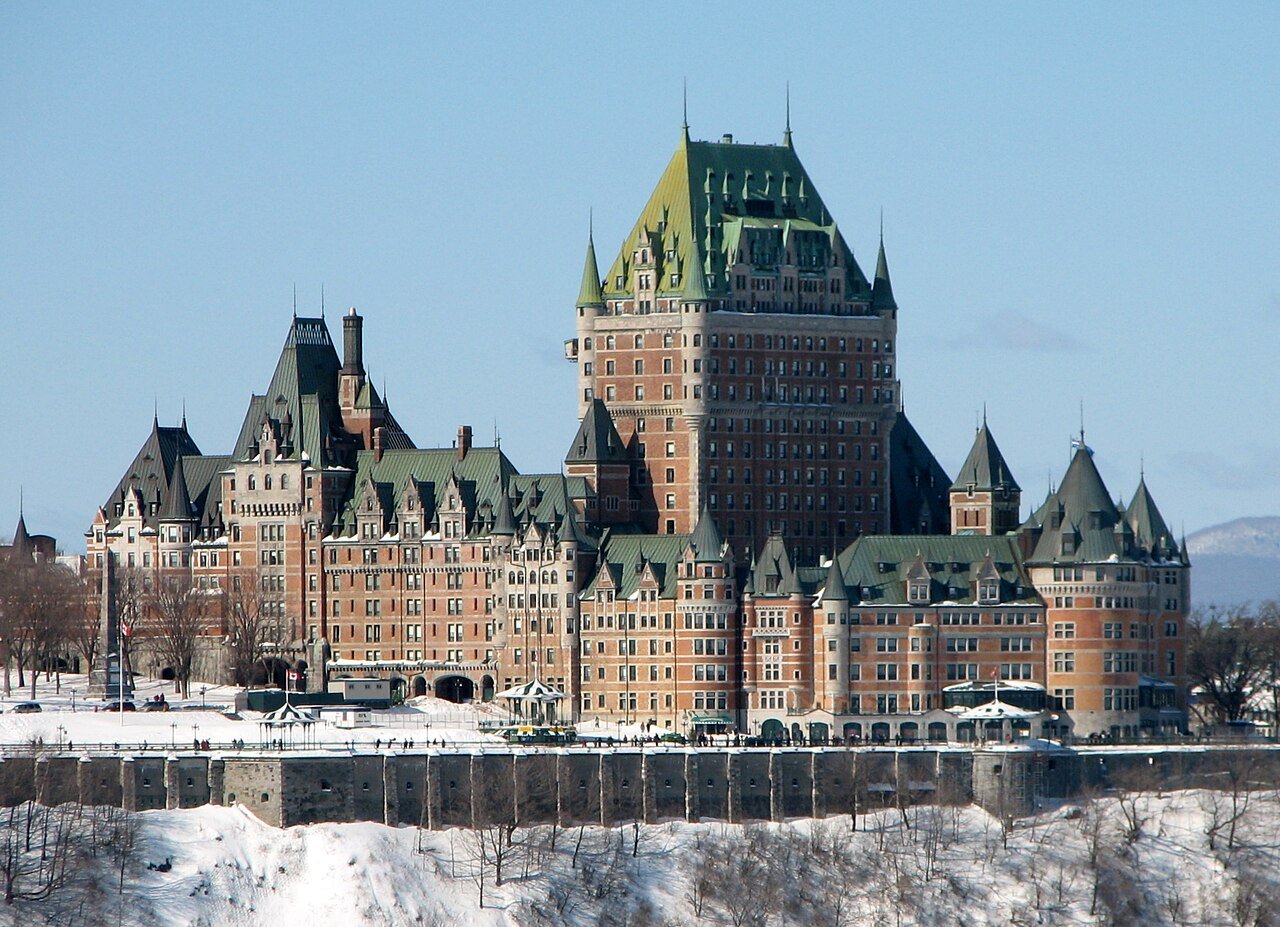
Featured photo: the Château Frontenac in Quebec City in winter, by Bernard Gagnon, CC BY-SA 3.0, via Wikimedia Commons.