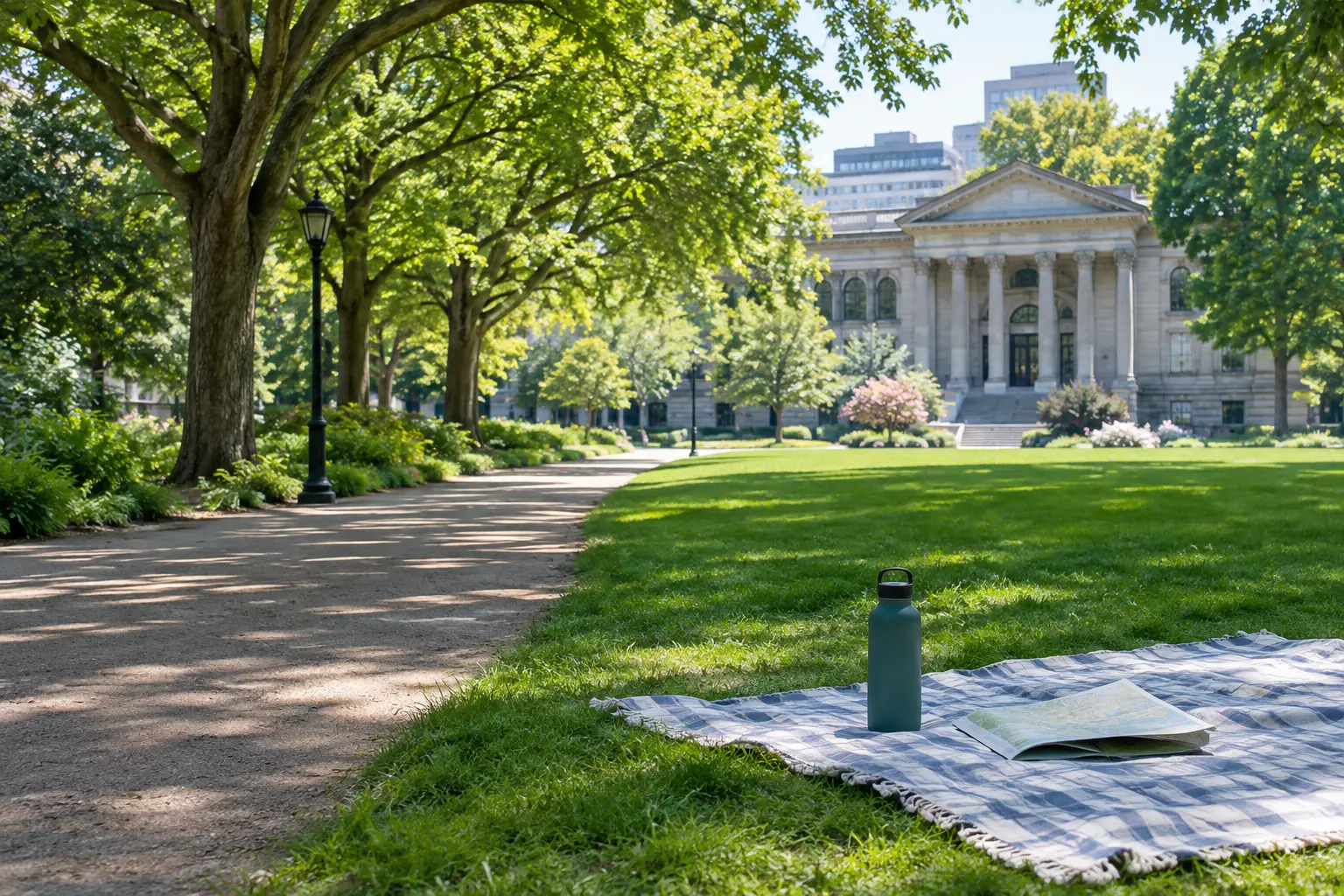
Short answer: The best free things to do in a new city are the ones that also help you meet people: get a library card, walk a different neighborhood each weekend, join a free run club or volunteer shift, check free museum days and outdoor concerts, and go to free community events like farmers markets and park festivals. Most cost $0; the only spending is optional extras like a coffee or a snack. When you invite someone along to a free plan, the simple rule is everyone covers their own extras, unless you’ve said “coffee’s on me.”
Moving somewhere new is expensive enough: deposits, furniture, the third trip to the hardware store. Meanwhile, the advice for settling in is always “get out there and explore.” The good news is that most cities offer far more free things to do than newcomers realize, and many of them are exactly the places where locals meet each other.
Below are 30 free ideas, grouped by type, each with what it really costs per person (usually $0, plus optional extras) and a suggestion for who pays when you bring someone. Prices for extras are rough US examples; they vary a lot by city.
Quick overview
| Type of plan | Typical cost per person | Good for meeting people? | Who pays for extras |
|---|---|---|---|
| Library and learning | $0 | Yes, through events and classes | Not usually any extras |
| Walking and exploring | $0, plus optional coffee | Yes, if you join a group walk | Each person their own |
| Free culture (museums, concerts) | $0 on free days, plus transit | Moderate | Each person their own |
| Fitness and outdoors | $0 | Very good (repeat groups) | Post-run coffee: each their own |
| Community and volunteering | $0 | Very good | Not usually any extras |
| Hosting at home | Low (potluck) | Excellent | Host covers space; guests bring a dish |
Last checked October 2026. Free days and programs change; confirm on the official site before you go.
Library and learning
1. Get a library card
Cost: Free for residents in most US and Canadian library systems. Who pays: Nobody. A library card is the single most useful free thing a newcomer can get: books, ebooks, audiobooks, quiet workspace, often free Wi-Fi and printing at a low cost.
2. Use library museum passes
Cost: Free or discounted admission with your card in many library systems. Who pays: Passes often cover more than one person, so invite someone; they cover their own snacks and transit.
3. Go to free library events
Cost: $0. Many branches run book clubs, author talks, language conversation groups, film screenings and workshops. Who pays: Nothing to pay. Recurring groups are one of the best ways to see the same faces every week.
4. Attend a free class or lecture
Cost: $0. Universities, community colleges and bookstores often host public lectures and readings. Who pays: Each person covers any coffee afterward.

Walking and exploring
5. Walk a new neighborhood every weekend
Cost: $0, plus transit to get there. Who pays: If you invite someone, each covers their own fare and any coffee stop.
6. Join a free walking tour
Cost: Some cities have truly free tours run by volunteers or local organizations; others are “pay what you wish,” where tipping the guide is expected. Who pays: Each person tips their own amount. Read the listing so you know which kind it is.
7. Visit the farmers market
Cost: $0 to browse; optional snack. Who pays: Each person buys their own; sharing a pastry is a nice gesture if you invited someone.
8. Find the best viewpoint
Cost: $0. Hills, bridges, public rooftops and parks with a view are free in most cities. Who pays: Nothing to pay.
9. Explore the waterfront, river trail or main park
Cost: $0. Who pays: Bring your own water and snacks, or each buy your own.
10. Go window shopping in a historic district
Cost: $0 if you resist. Who pays: Each person their own.
Free culture
11. Use free museum days
Cost: $0 on free days. Many museums have free days or evenings, and some are always free. For example, the Smithsonian museums in Washington, D.C. charge no general admission. Who pays: Each person their own café or gift shop extras.
12. Check card-based free admission programs
Cost: $0 for eligible cardholders. Bank of America’s Museums on Us program gives eligible cardholders free general admission at participating institutions on the first full weekend of every month. Free admission covers the cardholder only, and special exhibitions may be excluded. Who pays: If your friend doesn’t qualify, they pay their own ticket; offer to cover it only if you invited them and want to.
13. Go to a free outdoor concert or movie
Cost: $0. Many cities run free summer concert series and outdoor movie nights in parks. Who pays: Bring a picnic where each person brings something.
14. Visit gallery openings and art walks
Cost: $0. Galleries often hold free openings, and some neighborhoods run regular art walks. Who pays: Nothing to pay; buy your own drink if there’s a bar.
15. Catch an open mic or free comedy night
Cost: $0 cover at many venues, though some ask for a one-drink minimum. Who pays: Each person covers their own drink.
16. Tour public buildings
Cost: $0. City halls, state capitols and historic courthouses often offer free tours or open access to public areas. Who pays: Nothing to pay.

Fitness and the outdoors
17. Join a free run club
Cost: $0 for most community run clubs; many meet weekly at a park, a running store or a brewery. Who pays: Each person covers their own post-run coffee or drink.
18. Try free outdoor fitness classes
Cost: $0. Some cities and parks departments run free yoga or bootcamp sessions in warmer months. Who pays: Nothing to pay.
19. Hike a local trail
Cost: $0 on most city and county trails; some state parks charge parking. Who pays: If one person drives, the others can offer to cover parking or gas.
20. Visit a national park site on a fee-free day
Cost: Many National Park Service sites never charge an entrance fee, and those that do have a handful of fee-free days a year. From 2026, free entry on those days is for US citizens and residents only, so check the current list before you go. Who pays: Split gas if you carpool.
21. Play pickup sports
Cost: $0 at public courts and fields. Who pays: Whoever brings the ball, nobody else.
22. Have a picnic in the park
Cost: Whatever you bring. Who pays: Potluck-style, each person brings one thing. Our picnic date ideas work just as well for new friends.
Community and volunteering
23. Volunteer
Cost: $0. Food banks, animal shelters, park cleanups and community gardens all welcome newcomers. Who pays: Nothing to pay, and you meet people while doing something useful.
24. Go to a neighborhood festival or street fair
Cost: $0 entry at most; food and drink optional. Who pays: Each person buys their own.
25. Attend a community meeting or local event
Cost: $0. Neighborhood associations and community centers host meetings, cleanups and seasonal events. Who pays: Nothing to pay.
26. Join a language exchange or conversation group
Cost: Often $0, sometimes held at a café where you buy a drink. Who pays: Each person their own drink.
27. Visit places of worship or cultural centers
Cost: $0 for most services and many community events. Who pays: Nothing to pay; donations are optional.
Hosting and low-key plans
28. Host a potluck
Cost: One dish per person. Who pays: The host provides the space; each guest brings something.
29. Organize a game night
Cost: $0 if you have games; snacks optional. Who pays: The host may provide basics, guests bring snacks or drinks.
30. Start a walking or coffee group
Cost: $0 to walk; coffee optional. Who pays: Each person their own. Posting a regular time and place (“Sundays, 10 a.m., main park entrance”) is how many lasting groups begin.
For more low-cost plans, see our lists of outdoor activities with friends and cheap hobbies to meet people.
Who pays when you invite someone to a free plan
Free plans still have small costs: a coffee, a snack, a parking fee. The fair defaults:
- Each person covers their own extras unless the inviter clearly offers.
- If you drive, it’s normal for passengers to offer to cover parking or chip in for gas.
- If you invited someone and want to treat, say it simply: “Coffee’s on me after.”
- For shared food at a picnic or potluck, everyone brings one item rather than splitting a bill afterward.
The same logic applies to meeting new people in general, as we explain in who pays on a friend date: saying who pays up front, even for a $5 coffee, removes any awkwardness.
Turning free plans into new friends
Free activities only help you meet people if you go back, and if you talk to someone while you’re there. A few tips:
- Choose recurring events. A weekly run club or monthly book club beats a one-off festival, because you see the same faces repeatedly.
- Arrive a little early. The minutes before things start are when people chat.
- Suggest a small next step. “A few of us are grabbing coffee after, want to come?” turns an event into a friendship.
- Host something yourself. Once you know a handful of people, a potluck or game night brings them together.
- Try a shared meal. If you’re ready to spend a bit, a dinner with strangers or a ticketed supper club is another way to meet people quickly.
Safety when meeting new people
Meet in public places for the first few plans, tell a friend where you’re going, have your own way home and leave if anything feels off. Daytime events and well-attended public spaces are an easy start.
Want to turn this into an actual plan? MeetNow is a free app for meeting people in person: a host posts a plan at a public place, says who pays (host pays, split, pay your own or free) and picks who joins. It is live on the web now, starting in Malta, with the phone apps on the way: open MeetNow and see the plans near you.
FAQ
What are the best free things to do in a new city?
Get a library card, walk different neighborhoods, use free museum days, join a free run club or volunteer group, and go to free community events like farmers markets and park concerts.
How can I meet people in a new city for free?
Choose recurring free activities such as run clubs, library events, language exchanges and volunteering. Seeing the same people regularly is what turns acquaintances into friends.
Are museums really free?
Some are always free, many have free days or evenings, and card programs like Bank of America’s Museums on Us offer eligible cardholders free general admission on the first full weekend of each month. Check each museum’s site before you go.
Who pays for coffee after a free event?
By default, each person pays their own. If you invited someone and want to treat, say so up front.
How do I find free events in my new city?
Check your public library’s calendar, the city’s parks and recreation site, local news event listings and community boards at cafés and community centers.