Most cheap group plans don’t fall apart over the activity. They fall apart at the end, when the check lands and nobody ever said who pays. These budget friendly group outing ideas fix that. Each plan comes with a realistic cost per person and a clear who-pays suggestion, so friends can say yes without doing quiet math at the table.
Every cost below is a rough planning estimate in US dollars for a typical US or Canadian city, not a quote from a specific venue. Prices vary a lot by city, season and day of the week. Use the ranges to set expectations, and check the venue’s own website before you send the invite. Canadian readers should check local prices in CAD.
The list runs from free plans up to outings around $25 to $30 a head. It also covers evening plans, cheap weekend plans, how to split costs and how often to treat friends. For more options built for bigger crews, see our guide to cheap group activities for adults.
How to Pick Budget Friendly Group Outing Ideas That Work
A good cheap plan for a group needs three things:
- A cost the least-flush person can comfortably cover.
- Spending that stays individual wherever possible.
- A money rule everyone hears before they commit.
Run your idea through this quick filter before you post it in the group chat.
- Set a per-person ceiling. Base the number on the tightest budget in the group, not the average. If you’re unsure, ask privately or keep the plan under $20.
- Prefer pay-at-the-counter plans. Food halls, mini golf and bike-share let each person pay for exactly what they use. That removes most bill drama.
- Name shared costs early. Lane fees, groceries, parking and room rentals are the costs to split equally. Say so in the invite.
- Budget for tax and tip. Group totals often come up short because people add up menu prices and forget the extras. Ask everyone to round their share up.
- Keep a free fallback. If the plan changes or someone is short that week, a walk or a park meetup keeps everyone included.
The one-line invite rule: every invite should answer what, where, when and who pays. For example: “Potluck picnic at the park Saturday at noon. Bring one dish, I’ll bring drinks and plates.” Nobody has to ask, and nobody is surprised.
Free and Almost-Free Group Outings ($0 to $15)
These plans cost little or nothing to join. Any spending is either optional or shared evenly through a potluck-style setup.
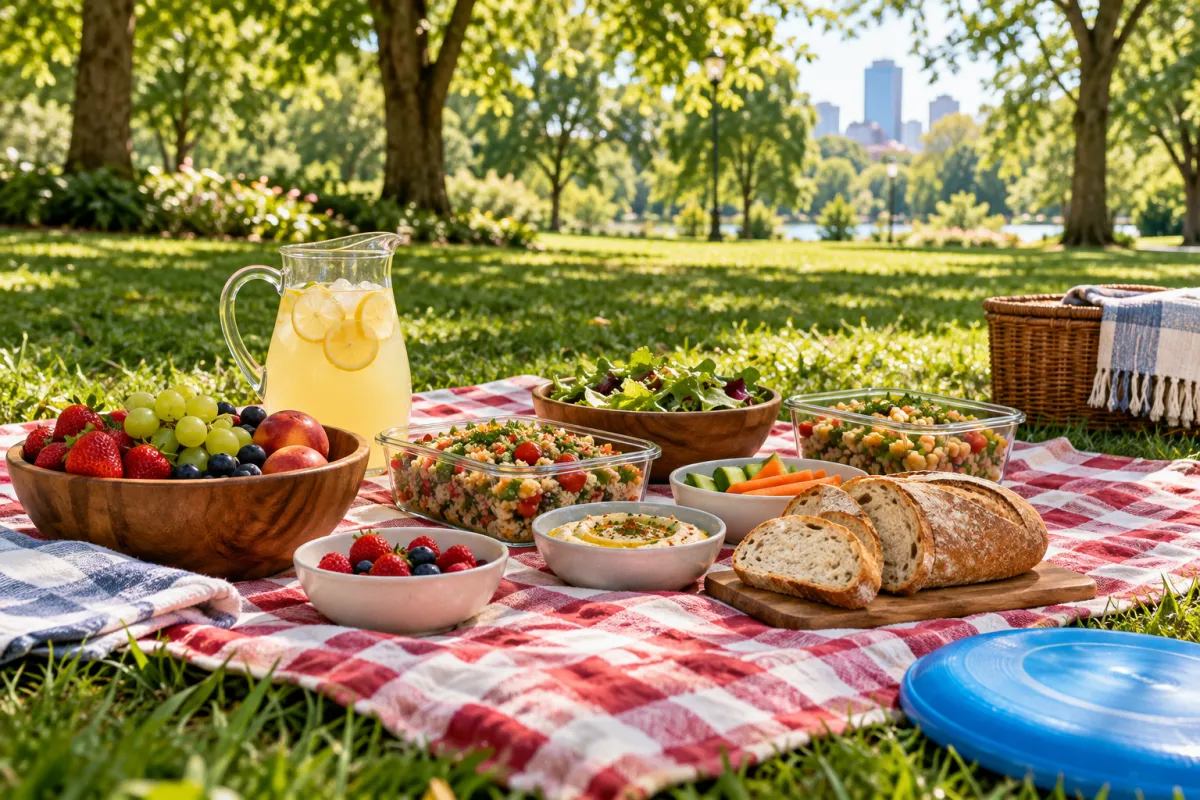
1. Park potluck picnic
Pick a park with shade, then assign categories: mains, sides, drinks and dessert. That way you don’t end up with five bags of chips. A shared list in the group chat keeps effort and cost even.
- Cost per person: about $5 to $15 for one dish or drink
- Who pays: each guest brings one item. The organizer covers small extras like plates and a blanket, or adds them to the list.
2. Group hike or long city walk
Choose a route everyone can finish, share it in advance and set a clear meeting point. Only add a café stop at the end if the group wants one.
- Cost per person: $0 to $10 for transit, parking or snacks
- Who pays: pay your own. Passengers split gas and parking with whoever drives.
3. Free museum or gallery hours
Many museums run free or pay-what-you-can hours. Check the museum’s website for current times and whether you need to reserve. Small galleries often have free openings, too.
- Cost per person: $0 entry, or $5 to $10 if you add coffee after
- Who pays: pay your own for anything after the visit.
4. Library and community center events
Public libraries and community centers often host talks, workshops, film screenings and board game afternoons. These are easy to suggest because nobody has to justify the cost.
- Cost per person: usually $0
- Who pays: nothing to split. If you grab food afterward, everyone pays their own.
5. Pickup games in the park
Frisbee, kickball, soccer or volleyball work for any group size and any skill level. Bring a speaker and some water, and you have a whole afternoon.
- Cost per person: $0, or a one-time $5 to $10 if you buy shared gear
- Who pays: whoever owns the gear brings it. If you buy something new for the group, split the cost once and keep it in rotation.
Group Outings Around $10 to $30 Per Person
These plans cost real money, but they stay predictable. Most can be paid at the counter or split along simple lines.
6. Home game night
Board games, card games or a video game tournament at someone’s place is the classic low-cost group plan. Rotate hosts so the same apartment doesn’t always take the hit.
- Cost per person: $5 to $15 for snacks and drinks
- Who pays: the host provides the space and games. Guests each bring a snack or drink so the host isn’t also buying all the food.
7. Off-peak bowling
Bowling alleys often price by lane or by game, and weekday afternoons or promo nights tend to be cheaper. Check the alley’s website for current rates.
- Cost per person: roughly $15 to $30 including shoe rental
- Who pays: split the lane fee equally. Shoes, food and drinks are pay your own.
8. Pub trivia
Trivia is usually free to play, and a team is a built-in group activity. Spending depends on what each person orders.
- Cost per person: $10 to $25 for one drink, a shared appetizer, tax and tip
- Who pays: pay your own. Ask for separate checks when you sit down. Shared appetizers are split only among the people who ate them.
9. Food hall or food truck crawl
Everyone orders from a different stall, then you share bites at one table. Variety is the point, and so is control over your own spending.
- Cost per person: $12 to $25
- Who pays: pay your own at each counter. For a shared tasting plate, one person pays and the others send their share by app.
10. Cook-together night
Dumplings, tacos or homemade pizza turn dinner into the activity itself. Buying ingredients in bulk is cheaper than everyone ordering separately.
- Cost per person: $8 to $15
- Who pays: split groceries equally. Whoever shops sends the total with a photo of the receipt.
11. Mini golf or a driving range
Both are low-skill, competitive and easy to talk through. They’re also a good choice when the group includes people who don’t know each other well.
- Cost per person: roughly $10 to $25
- Who pays: pay your own at the counter.
12. Thrift store challenge
Everyone gets the same small budget and a theme, like the best outfit for a fake wedding. Then you do a reveal over coffee or at the park.
- Cost per person: a self-set cap, usually $5 to $15
- Who pays: pay your own. The cap is what makes it fair and fun.
Cheap Things to Do at Night With a Group
Evening plans don’t have to mean cover charges or expensive rounds. These keep the cost low and the mood relaxed. For more evening options, our list of budget night out ideas under $25 adds plenty more.
13. Stargazing with thermoses
Find a park or open area away from bright lights where evening visits are allowed. Bring blankets, a star map app and something warm to drink.
- Cost per person: $0 to $5
- Who pays: everyone brings their own drink. Passengers split gas with the driver.
14. Backyard or living room movie night
A borrowed projector and a sheet on the wall feel like an event. Pick the movie by group vote so nobody has to sit through a film they hate.
- Cost per person: $3 to $8 for snacks or a rental
- Who pays: the host provides the space. Guests bring snacks, and any rental fee is split evenly.
15. Open mic, student recital or community theater
Local performances are often free or cheap, and they give the group something to talk about afterward.
- Cost per person: $0 to $20
- Who pays: pay your own ticket. If one person buys a block of tickets, everyone pays them back before the show.
16. Karaoke at home or in a rented room
Home karaoke with a speaker and lyric videos costs nothing. A private room at a karaoke venue is a step up, and it gets cheaper as more people share it.
- Cost per person: $0 at home, or roughly $15 to $30 as a share of a rented room
- Who pays: split the room fee equally. Drinks and food are pay your own.
Cheap Weekend Plans for Groups
Weekends give you daylight and time, which are the two things that make cheap plans feel generous.
17. Farmers market brunch
Meet at a farmers market, buy pastries, fruit and coffee from different stands, and eat together on a nearby bench or lawn.
- Cost per person: $10 to $20
- Who pays: pay your own at each stand.
18. Lake or beach day
Carpool to a lake or beach and run it like a picnic. One cooler, shared snacks, one ball and nothing else needed.
- Cost per person: $5 to $15 for gas, parking and snacks
- Who pays: passengers split gas and parking. Food is potluck.
19. Volunteer morning plus a cheap lunch
A park cleanup, food bank shift or community garden day gives the group a shared purpose. Lunch afterward is the reward.
- Cost per person: $0 to $15 for lunch
- Who pays: pay your own lunch. If you recruited everyone, buying the first coffee is a nice thank-you, but it’s optional.
20. Group bike ride
Plan a flat route with a destination: a viewpoint, a bakery or a park. People with their own bikes ride for free, and others can use a bike-share or rental.
- Cost per person: $0 with your own bike, or roughly $5 to $20 for a rental, depending on the city
- Who pays: pay your own rental. Choose the route so riders with rentals aren’t stuck paying for hours of extra time.
Cost and Who-Pays at a Glance
| Type of plan | Typical cost per person (estimate, USD) | Default who pays |
|---|---|---|
| Outdoor free plans (picnic, hike, pickup games, stargazing) | $0 to $15 | Bring your own or potluck |
| Free cultural and community events | $0 to $10 | Pay your own for extras |
| Home-hosted nights (games, movies, cooking) | $3 to $15 | Host gives the space, guests bring or split food |
| Counter-service activities (food hall, mini golf, market) | $10 to $25 | Pay your own |
| Shared-fee activities (bowling, karaoke room) | $15 to $30 | Split the shared fee, pay your own extras |
| Sit-down food and drink (trivia) | $10 to $25 | Separate checks |
These are planning estimates in USD for 2026. Prices vary by city and venue, so check before you invite.
Who Pays on a Group Outing: The Default Rules
Verdict: the organizer sets the money rule, but organizing is not the same as paying. Unless the invite says “my treat,” everyone pays their own way and shared costs are split equally.
- Individual items are pay your own. That covers your drink, your entrée, your shoes and your ticket.
- Shared costs are split equally among the people who used them. That covers lanes, groceries, room fees and parking.
- Drivers don’t cover gas alone. Passengers chip in without being asked.
- The guest of honor doesn’t pay. On a birthday outing, the group quietly covers their share.
- Hosting means space, not catering. If you open your home, guests bring food unless you’ve offered to cover it.
Splitting the whole check evenly sounds simple, but it’s the fastest way to annoy the friend who ordered water and a side salad. Roughly one-third of Americans strongly disagree with splitting a bill evenly if the individual meals and drinks were of unequal value (CBS News). Separate checks or pay-your-own avoid the problem entirely.
Defaults also shift by age. In dating, Millennials are notably more likely than older generations to expect or be open to splitting the bill on a first date, at 37% versus 26% (Bankrate). In a mixed-age group, don’t assume everyone shares your default. Spell it out.
When one person pays upfront for groceries, lane rental or a block of tickets, settle up within a day or two. A shared expense app makes this painless; our comparison of free bill-splitting apps can help you pick one. For birthday plans where the group covers the guest of honor, our cheap ways to celebrate a birthday keep that extra share small.
How Often Should You Treat Your Friends?
Verdict: there’s no magic number. Treat on occasions, rotate small things and aim for rough balance over a few months. Don’t keep an exact ledger. Small, frequent treats like a coffee or a round feel warmer than one big, rare gesture that leaves people feeling indebted.
Good moments to treat
- Celebrations: a birthday, a new job or a finished degree.
- Thank-yous: they helped you move, watched your pet or drove you to the airport.
- You picked the pricier plan: if you chose a venue above the group’s usual budget, offering to cover the difference is gracious.
- A tight stretch: if a friend is between jobs, cover them quietly and privately, never in front of the group.
Signs the balance is off
- The same person always fronts the money and waits to be paid back.
- Someone keeps declining plans that cost money but shows up for free ones.
- You notice resentment, either your own or theirs, when the check arrives.
The fix is usually not more treating. Pick plans that fit everyone’s budget, so nobody has to be carried. Rotating hosts and choosing more free outings evens things out naturally. For a deeper look at reciprocity, including how to tell a struggling friend from one taking advantage, read our guide on what to do when a friend always expects you to pay.
Scripts for the Money Talk
Most awkwardness disappears when someone says the rule out loud, early and casually. Borrow these lines as they are.
Invite scripts by money rule
- Pay your own: “Trivia Thursday at 7. Everyone gets their own drinks and food, and I’ll ask for separate checks when we sit down.”
- Split shared costs: “Bowling Sunday afternoon. We’ll split the lanes evenly, and shoes and snacks are on you. I’ll send the total after.”
- Potluck: “Picnic Saturday. I’ve got drinks and plates, so everyone bring one dish. Reply with what you’re bringing so we don’t end up with six desserts.”
- Host pays: “Game night at my place, and I’ve got pizza covered. Just bring yourselves.”
When a plan creeps over budget
- “I’m keeping things under $20 this month, so I’ll grab something small and catch you all at the next stop.”
- “Can we do separate checks? It keeps the math easy.”
Offering, accepting and declining a treat
- Offering: “This one’s on me. You got the last round.”
- Offering privately: “I’d love to cover you this time. No need to pay me back.”
- Accepting: “Thank you! Next coffee’s on me.”
- Declining: “That’s kind, but I’m happy to get mine.”
If the group has already ordered and nobody set a rule, our scripts for how to ask to split the bill cover every version of that moment.
Bringing New People Into the Group
Cheap group outings are one of the easiest ways to meet new people. A potluck, a pickup game or a trivia team gives everyone something to do besides small talk. State the money rule in the invite so newcomers aren’t left guessing.
When someone new is joining, or you’re the newcomer, keep the basics in place:
- Meet in a public place.
- Tell a friend where you’ll be.
- Arrange your own way home.
- Leave if anything feels off.
In the end, the best budget friendly group outing ideas aren’t simply the cheapest ones. They’re the ones where everyone knew the cost and the money rule before saying yes.
Want to turn this into an actual plan? MeetNow is a free app for meeting people in person: a host posts a plan at a public place, says who pays (host pays, split, pay your own or free) and picks who joins. It is live on the web and works in your browser, starting in Malta; the phone apps are not in the App Store or Google Play yet. Open MeetNow and see the plans posted in Malta.
Frequently Asked Questions
What is the cheapest group outing that still feels like a real plan?
A park potluck picnic or a group hike usually costs $0 to $15 per person and feels like an event because everyone contributes. Give it a start time, a place and a theme, and assign food categories so the effort and cost are shared evenly.
Who pays when you organize a group outing?
The organizer sets the rule in the invite, but organizing does not mean paying. By default, everyone pays their own individual items, and shared costs like lane fees, groceries or gas are split equally. The organizer only covers the bill if they clearly say so up front.
How often should you treat your friends?
There is no fixed number. Treat on occasions such as birthdays, celebrations or thank-yous, rotate small things like coffee or a round, and aim for rough balance over a few months rather than keeping an exact ledger. If one person is always paying, switch to cheaper plans instead of expecting them to keep covering.
How do you split costs fairly when some people spend more?
Split only the truly shared costs equally and have everyone pay for their own food and drinks. Ask for separate checks when you sit down, include tax and tip in each share, and use a bill-splitting app for anything one person paid upfront.
What are cheap things to do at night with a group?
Home game nights, backyard movie nights, stargazing with thermoses, open mics, community theater and karaoke at home all tend to stay between $0 and $20 per person. Keep it to the evening, pick a public or home setting, and make sure everyone has their own way home.