Short answer: In traditional Chinese dining etiquette, the person who invites (the host) pays for the whole table. Splitting a formal or family meal has long been seen as unusual, and guests often make a show of trying to pay, which is the famous “fight for the bill.” That fight is about the honor of hosting, not about avoiding the cost. Among younger friends and students, splitting evenly (called AA zhì) is increasingly common. Tipping is not customary in mainland China, though some upscale restaurants add a service charge.
If you’ve ever watched two relatives at a Chinese restaurant wrestle politely over the check, you’ve seen one of the most recognizable dining customs in the world. To an outsider it can look like an argument. To the people involved, it’s a way of showing generosity, respect and the value of the relationship.
This guide explains who usually pays at a Chinese meal, why, how the custom differs between settings and regions, what to do as a guest or as a host, and a few phrases that help. As with any cultural norm, practice varies widely between families, generations and cities, so treat this as a guide to common expectations rather than strict rules.
The core idea: whoever invites, pays
The basic principle will sound familiar if you’ve read our guide to who pays for dinner: the person who invites is the host, and the host pays. In Chinese dining culture this principle is especially strong. Inviting someone to a meal (qǐngkè, “to treat a guest”) is a gesture of hospitality, and paying for everyone is part of that gesture.
This is why splitting the bill at a family dinner, a celebration or a business meal is traditionally rare. Dividing the check can feel like reducing the meal to a transaction, when the point was to show care or respect. Guides to Chinese dining etiquette, such as Yoyo Chinese’s dining etiquette guide, describe the tradition of one person covering the table and the competition to pay as rooted in the honor of being the one who hosts.
Shared dishes make splitting harder anyway
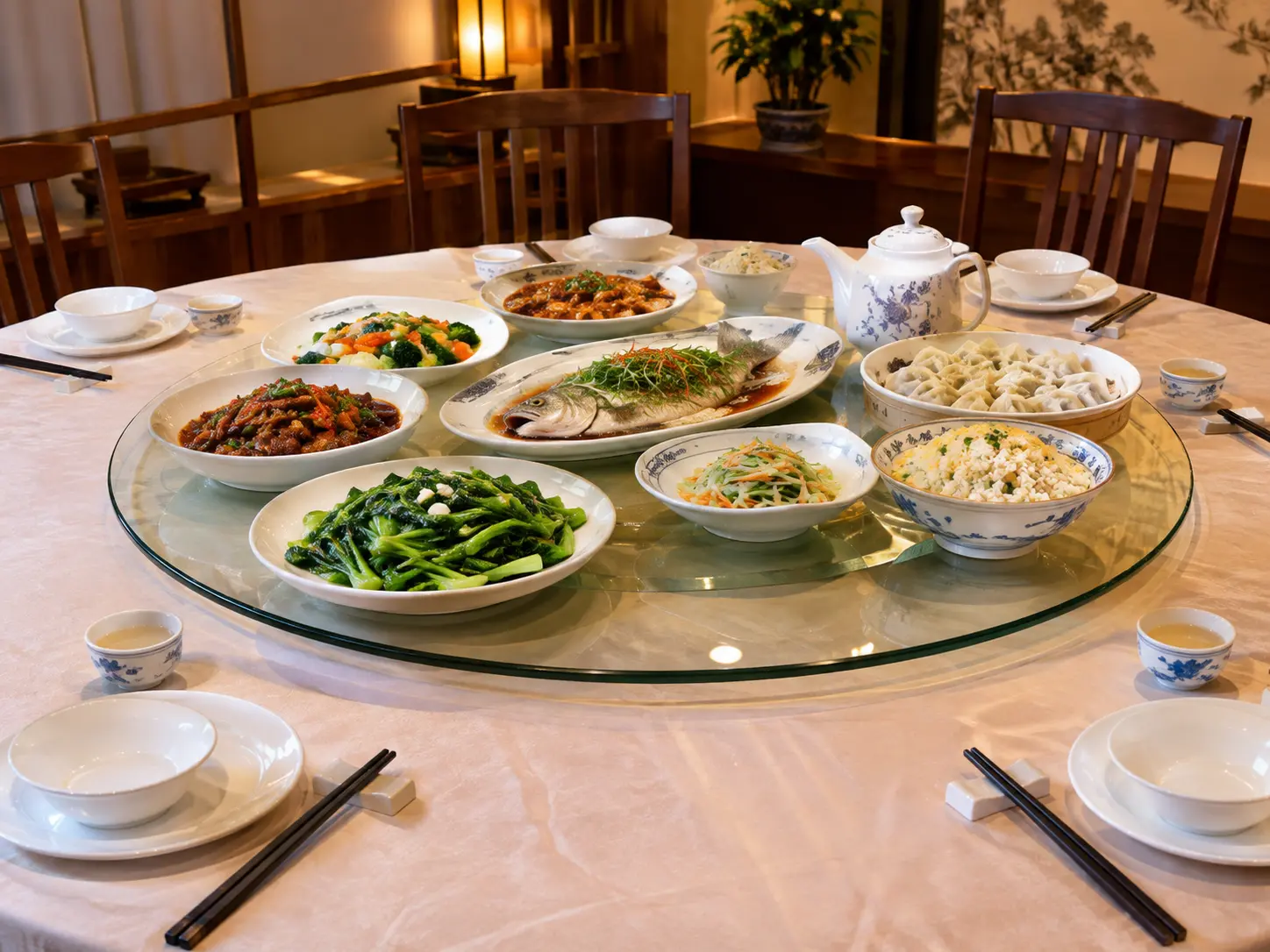
Chinese meals are typically served family-style: several dishes placed in the middle of the table, often on a rotating glass tray (sometimes called a lazy Susan), and everyone helps themselves. There’s no “my entree” and “your entree,” so itemizing a bill by person doesn’t really work. This practical detail reinforces the custom: one person pays, and next time someone else does.

The “fight for the bill,” explained
The fight for the bill (sometimes called qiǎngzhe mǎidān, “competing to pay”) is a ritual in which two or more people insist on paying. It usually starts when someone calls for the check, and it can involve:
- Repeated offers and refusals (“No, no, let me!” “You’re the guest!”)
- Reaching for the check or a phone at the same moment
- Someone quietly slipping away to pay at the counter before the bill even arrives
- Arranging in advance with the restaurant to settle the bill privately
The fight is a fight for the privilege of paying, not a dispute about avoiding it. Offering to pay shows respect and generosity; letting someone else “win” can also be gracious, especially if they’re older, more senior or the clear host. It usually ends when one person wins, or when the loser concedes with a promise: “Next time is on me” (xià cì wǒ qǐng).
Who usually “wins”
While every family and friend group has its own dynamics, some common patterns:
- The host who invited people to the meal is expected to pay.
- Elders and senior relatives often pay for younger family members, especially at family gatherings.
- A visiting guest, such as a friend from another city or a foreign visitor, is usually treated and not expected to pay.
- At “thank you” meals, the person saying thank you pays.
- In business settings, the inviting company or the more senior party typically pays. For the US and Canadian side of this, see who pays for a business dinner.
AA zhì: when Chinese friends split the bill
Splitting the bill exists in Chinese, too. The phrase is AA zhì, meaning everyone pays an equal share, roughly the same as “going Dutch” in English. (For how to ask to pay separately in other languages, see our guide to asking for the bill in different languages.) Nobody is quite sure where the “AA” comes from, and explanations differ.
AA zhì is especially common among:
- Students and young professionals eating with peers
- Groups of friends of similar age and income who eat out often
- Casual meals where nobody is clearly the host
It’s less common at family dinners, celebrations, formal banquets and business meals, where one person hosting remains the norm. Some people of older generations may still see splitting as a little stingy, so the safe approach is to follow the lead of the people you’re eating with. Payment apps that let people transfer money quickly have made splitting much easier in practice, whether the group splits evenly or one person pays and others send their share.
Comparison: who pays in Chinese-speaking regions
Customs overlap across Chinese-speaking places but are not identical. The table below gives general tendencies; individual families and friend groups vary a lot.
| Region / setting | Who usually pays | Splitting norm | Tipping / service |
|---|---|---|---|
| Mainland China, family or formal meal | The host, often the eldest or most senior | Rare; seen as unusual for these meals | Tipping not customary; many high-end restaurants add a 10% service charge |
| Mainland China, young friends | Whoever invites, or everyone | AA zhì (even split) increasingly common | Tipping not customary |
| Hong Kong | The host, with the same “fight” ritual | Common among friends and colleagues | A 10% service charge is common at sit-down restaurants; extra tipping optional |
| Taiwan | The host for formal and family meals | Common among friends | Many restaurants include a service charge; tipping isn’t expected |
| Chinese families in the US and Canada | Varies; many keep the host-pays and elders-pay customs at family meals | Common among friends | Local tipping norms apply (15–20% is typical in the US) |
Last checked October 2026. Tipping sources: Cathay Pacific’s guide to tipping in the Chinese mainland; travel guides for Hong Kong and Taiwan. Always check the bill for a service charge before adding a tip.
Useful phrases for the bill
| Pinyin | Meaning |
|---|---|
| mǎidān | The check, please (common in mainland China; the word comes from Cantonese) |
| jiézhàng | To settle the bill |
| wǒ qǐngkè | It’s my treat |
| xià cì wǒ qǐng | Next time is on me |
| AA zhì ba | Let’s split it evenly |
| xièxie kuǎndài | Thank you for your hospitality |
If you’re the guest
Whether you’re visiting China or invited to a Chinese family dinner at home in North America, these habits keep you on the right side of etiquette:
- Offer to pay, sincerely, at least once. Even if you know you’ll be treated, the offer matters. Reaching for the check shows you value the relationship.
- Don’t over-fight if you’re clearly the guest. If the host invited you, insisting too hard can come across as refusing their hospitality. Two offers is a good rule of thumb.
- Accept graciously. Thank the host warmly; xièxie kuǎndài (thank you for your hospitality) is a nice touch.
- Return the favor. The expectation of reciprocity is strong. Invite the host to a meal next time, or bring a thoughtful gift on your next visit.
- Follow the seating cues. The seat of honor is usually the one facing the entrance, and the host typically guides people to their places. Wait to be seated.
If you’re the host
- Make it clear you’re hosting. “Let me take you to dinner” sets the expectation.
- Order generously. Hosts typically order enough shared dishes for everyone; running out of food can feel inhospitable.
- Pay discreetly. Many hosts settle the bill away from the table, or arrange payment in advance, so guests don’t have to “fight.”
- Expect a counter-offer. When guests insist on paying, a smile and “Next time is yours” usually ends it.

Three common scenarios, and what usually happens
A friend’s parents take you to dim sum
You’re the guest, and the parents are the hosts. Offer to pay once, sincerely, perhaps when the check arrives. When they decline (they almost certainly will), thank them warmly and accept. Afterward, a thank-you message and, later, a small gift or an invitation for your friend’s family to a meal you host are thoughtful ways to reciprocate.
Dinner with classmates or young coworkers
Nobody is the clear host, everyone earns roughly the same, and the dishes are shared. Splitting evenly is very likely. Someone may pay the restaurant and ask everyone to transfer their share; just send yours promptly. If someone announces “wǒ qǐngkè” (my treat) because they’ve had good news, let them, and offer to treat next time.
A business banquet
The inviting company, or the most senior person on the inviting side, pays, often discreetly. As a visiting guest, don’t try to pay; thank your hosts and, if the relationship continues, offer to host the next meal when they visit you.
Mistakes visitors often make
- Offering to “go Dutch” at a family meal. Among peers it’s normal; at a meal hosted by elders it can sound as if you’re declining their hospitality.
- Never offering at all. Even when you’ll be treated, not reaching for the check can seem like you’re taking the host for granted.
- Fighting too hard as the guest of honor. One or two sincere offers is respectful; turning it into a real argument can embarrass the host.
- Forgetting reciprocity. Being treated creates a gentle expectation that you’ll host next time. Following through matters more than the size of the meal.
- Tipping on top of a service charge. In places where a service charge is already on the bill, an extra tip usually isn’t expected.
How it compares with other countries
The Chinese approach sits at one end of a spectrum. In Germany, asking “zusammen oder getrennt?” (together or separate?) is a routine question, as we explain in splitting the bill in Germany. In Japan, splitting (warikan) is common among peers while bosses and elders often treat; our guide to whether you need cash in Japan covers paying at the register and settling group meals. In the US and Canada, separate checks are normal among friends, while “whoever invites pays” governs dates and formal meals.
Understanding where your companions are coming from helps more than any rule. If you’re not sure, a simple question before the meal (“Is this your treat, or shall we split?”) is polite in almost every culture, and much less awkward than guessing when the check arrives.
Want to turn this into an actual plan? MeetNow is a free app for meeting people in person: a host posts a plan at a public place, says who pays (host pays, split, pay your own or free) and picks who joins. It is live on the web now, starting in Malta, with the phone apps on the way: open MeetNow and see the plans near you.
FAQ
Who pays at a Chinese dinner?
Traditionally, the host who invited everyone pays for the whole table. At family meals, elders or the most senior person often pay. Among younger friends, splitting evenly (AA zhì) is increasingly common.
Why do Chinese people fight over the bill?
Paying is an honor and a way of showing generosity and respect. The “fight” is a competition for that privilege. It usually ends when one person pays and the other promises to treat next time.
Is it rude to split the bill in China?
Not among peers who agree to it; AA zhì is normal for students and young friends. At family dinners, celebrations or business meals, splitting can seem unusual, so follow your host’s lead.
Should you tip in China?
Tipping isn’t customary at most restaurants in mainland China. Many upscale restaurants add a 10% service charge, and in Hong Kong a 10% service charge is common. Check the bill before adding anything.
How should a guest respond when the host insists on paying?
Offer once or twice, then accept graciously and thank the host. Return the favor by inviting them to a meal in the future.