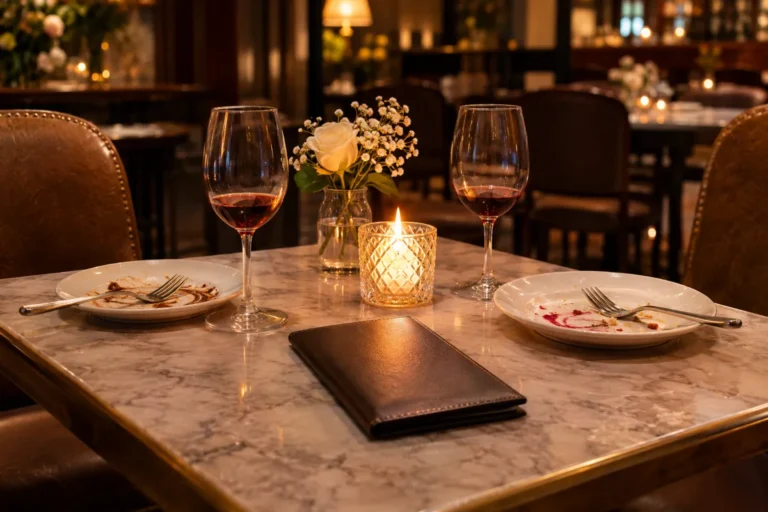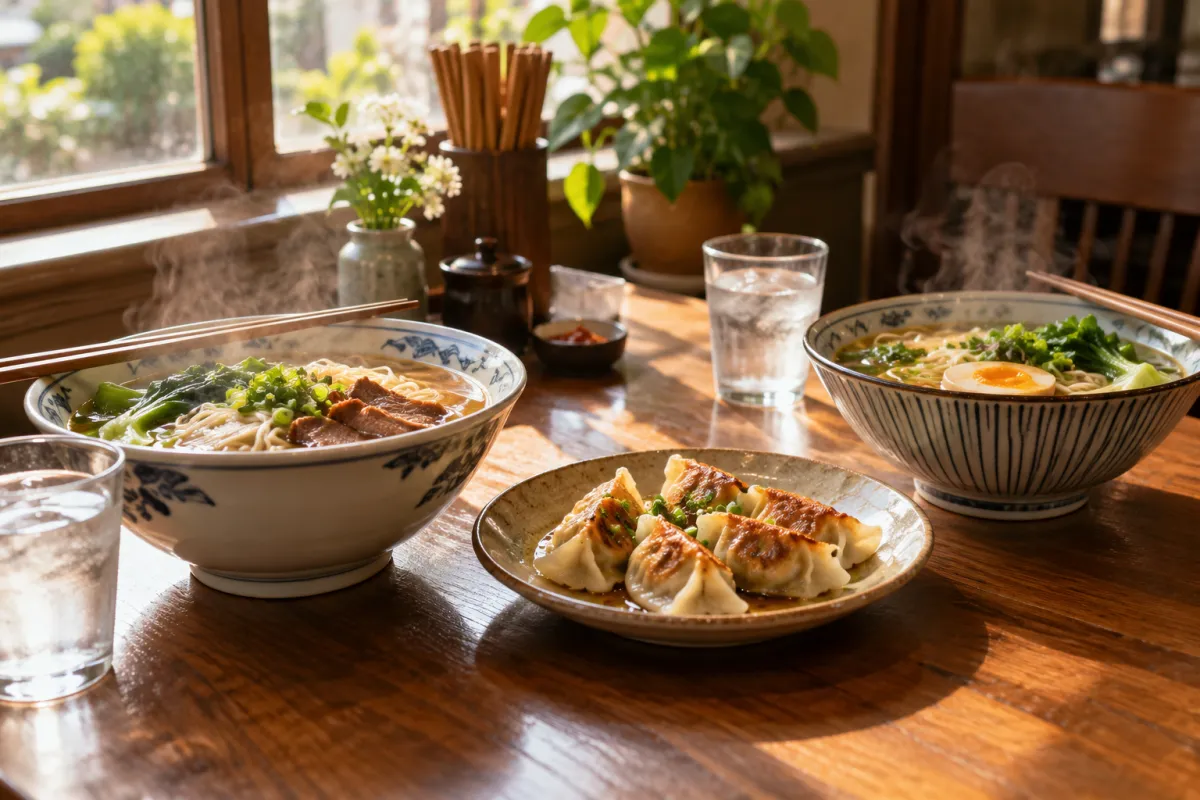
A steaming bowl of noodles at a corner table makes a better date than a tasting menu you both spend quietly worrying about. That is the whole case for cheap restaurant date ideas: the food is good, the bill stays small, and nobody walks out feeling they owe the other person something. The conversation does the heavy lifting, not the price tag.
Below are 20 worked examples, each with a rough cost per person and a who-pays suggestion, so you can pick a plan and know how the check will go before you sit down. All costs are illustrative per-person estimates in US dollars, including tax and tip at a typical casual spot. They are not quotes from any specific venue. Prices vary a lot by city and neighborhood, and Canadian readers should read them as a ballpark in CAD and adjust for local menus.
We also cover the default rules for who pays, ready-to-use scripts, how to plan a birthday dinner on a budget, and when a potluck beats a restaurant.
How to Keep a Restaurant Date Cheap Without Looking Cheap
A budget date only feels stingy when the cost-cutting is visible at the table: counting fries, refusing dessert with a sigh, or doing math out loud. The trick is to make the savings happen in the planning, so the date itself feels relaxed and generous. If you are still deciding what total feels right, our guide on how much to spend on a first date walks through realistic budgets by situation.
- Pick the cheaper meal slot. The same restaurant often runs a shorter, lower-priced lunch or brunch menu. Breakfast and lunch dates also feel lower pressure, which helps on a first meeting.
- Check the menu online first. If prices are posted, neither of you gets a surprise. Choose a place where everything on the menu fits your budget, so you never have to steer anyone away from a dish.
- Order to share. Two mains and one starter split between you usually costs less than two full three-course meals, and sharing is more fun.
- Watch the drinks. Drinks are where small bills quietly grow. One drink each, a shared pot of tea, or a BYOB restaurant keeps things in check.
- Add a free second stop. Pair a short meal with cheap activities for couples: a walk by the water, a free gallery, a park bench with takeaway dessert. The date feels fuller without a bigger bill.
- Settle who pays before you order. One sentence in the invitation avoids the awkward reach for the check later.

20 Cheap Restaurant Date Ideas With Cost and Who Pays
Each idea lists a rough cost per person and a default who-pays suggestion. Defaults are just that: if you have already agreed to split or take turns, your agreement wins. For even more low-cost plans beyond restaurants, see our full list of cheap date ideas with costs and who pays.
Breakfast and brunch
1. Classic diner breakfast
Booths, bottomless coffee, and a menu that has not changed in years. A diner breakfast is relaxed, quick if the chemistry is off, and easy to stretch if it is not. It also signals that you care about the person more than the setting.
Cost per person: about $12 to $20. Who pays: the person who invited covers it; it is an easy, low-stakes treat.
2. Weekday brunch instead of weekend brunch
Weekend brunch can mean long lines and pricier specials. If your schedules allow, a weekday late breakfast at the same spot is calmer and often cheaper. You get the eggs-and-pastries experience without the crowd.
Cost per person: about $18 to $30. Who pays: asker pays on a first date; established couples take turns.
3. Bakery-café pastries and coffee
Choose a bakery with a few tables, order two different pastries, and swap halves. It is short enough for a first meeting and pairs well with a walk afterward.
Cost per person: about $8 to $15. Who pays: one person pays; the other covers the next coffee.
Lunch dates
4. The lunch menu at a nicer restaurant
Want the atmosphere of a nicer restaurant without the dinner bill? Many sit-down places run a lunch menu with smaller portions and lower prices. Look for it on the restaurant’s own website before you book.
Cost per person: about $18 to $35. Who pays: whoever suggested the upgrade pays, or you agree to split when you book.
5. Food hall date
A food hall solves the “what do you feel like?” problem. Each of you picks a different stall, you meet at a shared table, and you taste each other’s choices. It also makes paying separately feel completely natural.
Cost per person: about $12 to $25. Who pays: pay your own; one of you can treat the other to a shared dessert.
6. Dumpling or noodle shop
Dumpling houses and noodle shops tend to be fast, filling and affordable, with plenty to share. Order a few plates for the table and let the conversation set the pace.
Cost per person: about $12 to $22. Who pays: asker pays, or split evenly since everything is shared.
7. Taco crawl
Pick two or three taquerias or taco trucks within walking distance and order one or two tacos at each stop. Rating salsas becomes an instant conversation topic.
Cost per person: about $10 to $20 total. Who pays: alternate stops, so each of you treats once without anyone keeping score.
Casual dinners
8. Pizza to share
One large pie split two ways, or a few slices at a counter. Pizza is the most universally agreeable date food, and arguing about toppings counts as flirting.
Cost per person: about $10 to $18. Who pays: asker pays; it is a small enough bill that a treat feels natural.
9. Pho, ramen or soup house
A big bowl of soup is warming, filling, and usually priced well below a typical dinner entrée. Great for colder months and for people who like their dates cozy rather than flashy.
Cost per person: about $15 to $25. Who pays: asker pays on a first date; couples alternate.
10. BYOB restaurant
Bring-your-own-bottle restaurants let you skip restaurant drink markups. Call ahead or check the website to confirm the policy and whether there is a corkage fee, since rules differ by place and local laws.
Cost per person: about $20 to $35 including your share of the bottle. Who pays: one person buys the bottle, the other covers the food, which feels balanced.
11. Burger counter and a walk
Order at the counter, eat at an outdoor table, then walk it off. Counter service keeps costs down because there is less table-service overhead, and the walk gives the date a second act.
Cost per person: about $12 to $20. Who pays: pay your own or asker pays; either feels fine at this price.
12. Early-evening snack menu
Some bars and restaurants offer reduced-price small plates in the early evening. Treat it as a light dinner: a few shared bites, one drink each, and you are done well before any rush.
Cost per person: about $15 to $30. Who pays: split, or one person treats and the other gets the next round of plates.
13. Shared small plates
At a tapas, mezze or izakaya-style spot, order three or four plates to share rather than individual mains. You taste more, and the bill splits cleanly down the middle.
Cost per person: about $20 to $35. Who pays: split evenly; sharing makes an even split the fairest option.
14. Food truck dinner and a park bench
Find a food truck, grab two different dishes, and eat on a bench or a blanket nearby. It is casual, outdoors and public, ideal for an early date.
Cost per person: about $10 to $18. Who pays: asker pays, or each orders and pays for their own dish.
15. Prix fixe or restaurant week menu
Many cities hold restaurant weeks or similar promotions, and some restaurants run set menus year-round. A fixed price means you both know the total in advance, which takes the guesswork out of the check. Check your city’s official tourism or restaurant association site for current dates and participating venues.
Cost per person: about $25 to $45 before drinks. Who pays: agree when you book; this is a good “special occasion on a budget” treat.
16. Student-run teaching restaurant
Some culinary schools operate dining rooms open to the public, where students cook and serve under instructor supervision. Prices are often modest for the quality. Check whether a program near you has one and how reservations work.
Cost per person: about $20 to $35. Who pays: asker pays, since it usually needs a reservation and some planning.
Dessert and coffee add-ons
17. Dessert-only date
Skip dinner and go straight to dessert at a café or pastry shop. It is a great second-date format: short, sweet and cheap, with an easy exit or an easy extension.
Cost per person: about $8 to $15. Who pays: whoever did not pay last time.
18. Coffee date with a shared pastry
The classic first-meeting format, upgraded slightly with something to share. It keeps the commitment small for both of you while still feeling like a real date.
Cost per person: about $6 to $12. Who pays: asker pays; at this price, a treat is simple and unfussy.
19. Ice cream or gelato walk
Grab a cone and walk through a neighborhood you both like. Pair it with a cheap dinner elsewhere, or let it stand alone on a warm afternoon.
Cost per person: about $5 to $10. Who pays: one person treats; the other buys next time.
20. Takeout picnic
Order takeout from a favorite cheap spot and eat it in a park. You get restaurant food at takeout prices, and you skip the table-service tip. Pack napkins and a blanket.
Cost per person: about $12 to $20. Who pays: one person buys the food, the other brings drinks and dessert.
Cheap Restaurant Date Ideas at a Glance
Use this summary to match a plan to your budget and the stage of your relationship. Figures are rough per-person estimates in USD, not prices from specific venues; adjust for your city.
| Idea | Rough cost per person | Best for | Default who pays |
|---|---|---|---|
| Diner breakfast | $12 to $20 | First date | Asker pays |
| Bakery-café | $8 to $15 | First meeting | One pays, other gets next |
| Lunch menu at a nicer spot | $18 to $35 | Second or third date | Asker pays or split |
| Food hall | $12 to $25 | Picky eaters | Pay your own |
| Taco crawl | $10 to $20 | Playful date | Alternate stops |
| BYOB restaurant | $20 to $35 | Anniversary on a budget | One buys bottle, other food |
| Shared small plates | $20 to $35 | Foodies | Split evenly |
| Prix fixe menu | $25 to $45 | Special occasion | Agree when booking |
| Dessert-only | $8 to $15 | Second date | Whoever did not pay last |
| Takeout picnic | $12 to $20 | Warm days | Food and drinks split |
Who Pays on a Budget Restaurant Date
The verdict: on a first date in the US or Canada, the person who asked should be ready to pay and should offer. The other person should offer to split or contribute, and either answer is polite. After the first date or two, taking turns or splitting is the fairest long-term default. Low-cost plans make all of this easier, because a treat never feels like a big ask.
Default rules
- First date: the inviter offers to pay. If you want to split, say so in the invitation rather than at the table.
- Early dates: take turns. “You got the last one, this one’s mine” keeps things even without spreadsheets.
- Big income gap: the person with more room in their budget can treat more often, but let the other contribute in their own way, such as cooking or covering dessert.
- Shared plates: split evenly. Itemizing a shared plate is more awkward than any small imbalance.
- Tipping: at table-service restaurants in the US and Canada, a tip is expected, and whoever pays the bill covers it. If you used a deal or coupon, tip on the full pre-discount amount.
Scripts you can use
- Inviting and treating: “I’d love to take you to this noodle place I like. My treat, since I’m asking.”
- Proposing a split up front: “Want to grab brunch on Saturday? Let’s go halves.”
- Accepting a treat gracefully: “Thank you, that’s really kind. Dessert’s on me next time.”
- When they insist on paying: “I appreciate it. At least let me get the tip.”
- Suggesting turns: “How about we take turns? I’ll get this one, you get the next.”
For more wording by situation, see our guides on how to offer to pay politely and how to ask to split the bill.
How to Plan a Birthday Dinner on a Budget
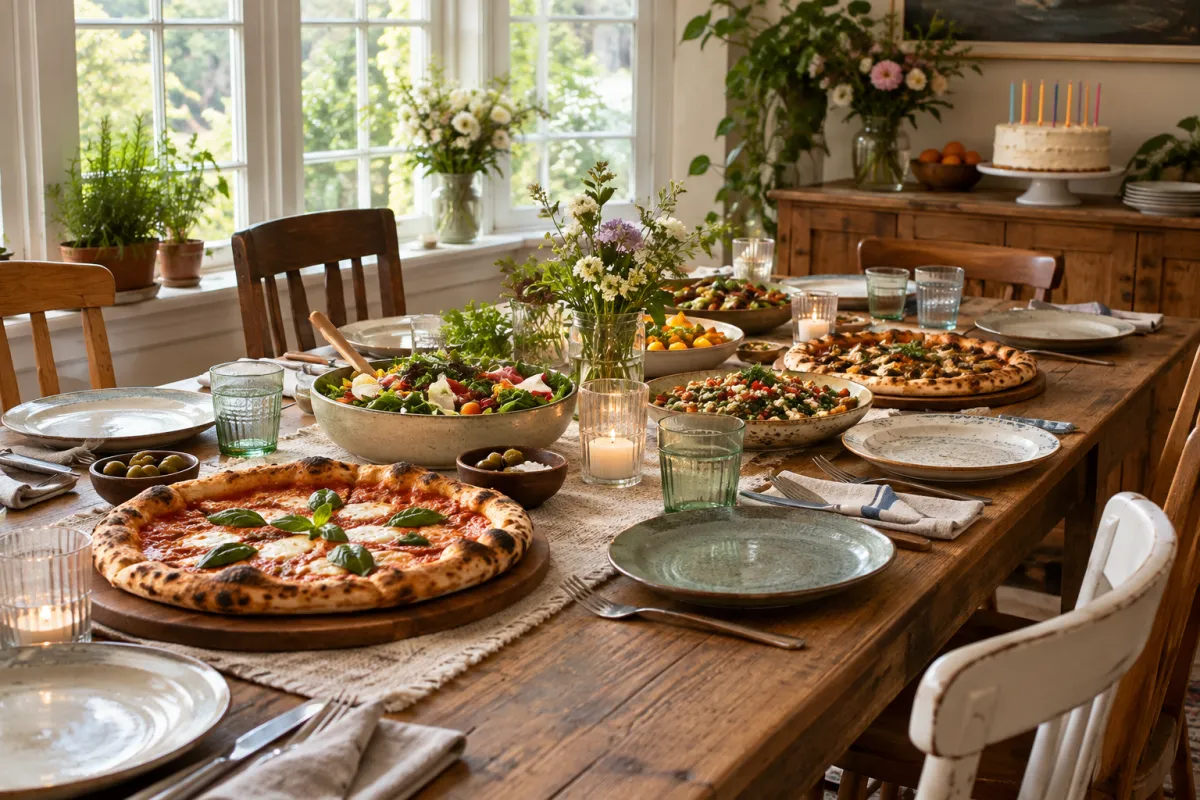
Many of the same cheap restaurant date ideas scale up nicely for a birthday. The goal is a meal that feels celebratory, where every guest knows roughly what they will spend before they arrive. Here is how to plan a birthday dinner on a budget without anyone feeling ambushed by the check.
- Choose a cheaper slot. A birthday brunch or lunch usually costs less than dinner and is easier to book for a group.
- Pick a predictable format. Pizza, dumplings, family-style platters or a set menu make it easy for guests to estimate their share. Avoid places where one person’s order can be triple another’s.
- Put who pays in the invite. For example: “Birthday lunch for Sam at the dumpling place on Main. Everyone pays their own, and we’ll split Sam’s meal between us.”
- Share the guest of honor’s cost. Splitting the birthday person’s meal evenly among guests is the common North American default. Agree on it ahead so no one is surprised.
- Ask the restaurant a few questions. Do they offer separate checks for groups? Is there a fee for bringing your own cake? Do they add an automatic service charge for large parties? Knowing this ahead avoids awkward math at the end.
- Move dessert. A homemade cake at someone’s place, or ice cream on a walk afterward, is often cheaper than restaurant desserts for the whole table.
For group scripts and how to handle the one guest who orders the most expensive thing, read who pays for a birthday dinner.
Potluck vs Restaurant: Which Works Better?
When you are celebrating with friends or planning a double date, the potluck vs restaurant question comes down to money, effort and setting. Neither is always better.
| Factor | Potluck | Restaurant |
|---|---|---|
| Typical cost | The cost of one dish each, often lower | Menu price plus tax and tip |
| Effort | Cooking, hosting, cleanup | Booking only |
| Fairness | Uneven if some bring a lot more | Clear if you split or pay your own |
| Who pays | Everyone contributes food; host covers space and basics | Agreed in the invite |
| Best for | Friend groups, birthdays, established couples | First dates, mixed groups, people who do not know each other well |
The verdict: choose a potluck for friends who already know each other and a host with space and energy. Choose a restaurant for first dates and anyone you are meeting for the first time. A restaurant is neutral, public ground; a potluck in someone’s home is not the right setting for a first meeting. If you do host a potluck, assign categories (main, side, dessert, drinks) so contributions stay roughly equal and nobody brings three bags of chips.
Meeting Someone New: Quick Safety Checklist
Cheap dates are often first dates, and first dates are often with someone you met online or through friends of friends. Keep these basics in place, whatever the budget:
- Meet in a public place. Every idea above happens at a restaurant, café, food hall or busy park.
- Tell a friend. Share where you are going, who you are meeting, and roughly when you expect to be done.
- Arrange your own way home. Drive yourself, take transit, or book your own ride, so you can leave whenever you want.
- Leave if you feel uncomfortable. You never owe anyone more time. Paying for your own share can make an early exit simpler.
- Daytime helps. Breakfast, lunch and coffee dates are naturally short and well lit, which is part of why they work so well for first meetings.
Want to turn this into an actual plan? MeetNow is a free app for meeting people in person: a host posts a plan at a public place, says who pays (host pays, split, pay your own or free) and picks who joins. It is live on the web and works in your browser, starting in Malta. The Android app is on Google Play; the iPhone app is not in the App Store yet. Open MeetNow and see the plans posted in Malta.
FAQ: Cheap Restaurant Dates
Is it okay to suggest a cheap restaurant for a first date?
Yes. A casual, affordable spot is often the best choice for a first date because it keeps the pressure low for both people. What matters is that you pick somewhere you genuinely like, show up on time, and handle the bill smoothly. A thoughtful diner or noodle shop says more about you than an expensive restaurant chosen to impress.
Who should pay on a cheap restaurant date?
On a first date, the person who asked should offer to pay, and the other person can offer to split. Both responses are polite. After the first date or two, taking turns or splitting evenly is the fairest default. If you want to split from the start, mention it in the invitation so nobody is surprised at the table.
How much should a cheap restaurant date cost?
There is no single right number because prices vary widely by city and neighborhood. As a rough guide, casual options like coffee, dessert, food trucks or pizza tend to sit at the low end, while lunch menus, shared plates and set menus cost more. Check the menu online before you go and choose a place where everything fits your budget.
How do I suggest splitting the bill without it being awkward?
Say it early and keep it light. Put it in the invitation with a line like “Want to grab brunch? Let’s go halves,” or suggest taking turns: “I’ll get this one, you get the next.” Raising it before you order feels natural; raising it when the check lands is what creates awkwardness.
Is a potluck cheaper than a restaurant for a birthday?
Usually, yes, because each guest pays only for one dish and there is no tax or tip. But a potluck asks more effort from the host and works best for friends who already know each other. For mixed groups or people who prefer not to cook, a predictable, affordable restaurant with the who-pays plan stated in the invite is often the smoother choice.