Four people, one check, and two couples who each assume the other has a plan. That is the moment when the question of who pays for dinner on a double date stops being hypothetical. The common practice in the US and Canada is simpler than most people expect. Each couple counts as one unit, and the bill is split down the middle between the two pairs, unless one couple clearly invited the other as their treat.
That default holds whether you are out with your best friend and her new partner, your brother and his wife, or a couple you know through work. The trouble is at the edges. One pair orders steak and a good bottle while the other shares a salad. Somebody is celebrating. One couple quietly hands over a card before anyone else can reach for the folder. Below you will find a clear verdict, a situation table, wording you can borrow, and related cases like farewell and Mother’s Day dinners.
For the bigger picture across dates, friends and work meals, start with our guide to who pays for dinner in every situation. This article zooms in on the four-person, two-couple table.
Short answer: On a double date, split the check 50/50 between the two couples, not four ways and not item by item. If one couple invited the other as a treat, the inviting couple pays and the invited couple offers to contribute. If one couple ordered noticeably more, they should offer to cover the difference or the tip.
Who pays for dinner on a double date: the verdict
The default is a clean couple split. Couple A pays half, Couple B pays half, and nobody at the table does long division over who had the extra glass of wine. One summary of double-date etiquette says that on a double date “you function as two pairs,” and notes that partners often share appetizers, sides or rounds of drinks, which makes a split by couple the smoothest way to handle the check (double-date etiquette guidance).
Three things can move you off that default:
- An invitation framed as a treat. If one couple said “we’d love to take you out,” they are hosting, and hosts pay.
- A real gap in spending. If one couple ordered far more, especially alcohol or premium dishes, they should offer to make up the difference.
- A budget conversation before the meal. If someone said early on that money is tight this month, a pay-your-own arrangement or a cheaper venue is the considerate move.
Everything else is a private matter between partners, including who in each couple actually pays their half. Treat these as common practice, not rules. Classic etiquette guidance tends to rest on two ideas: be clear about who invited whom, and be considerate of everyone’s budget. If you keep those two in mind, you will rarely get the check wrong.
Planning with people you haven’t met yet? MeetNow is a free app that works in your browser and on Android through Google Play, starting in Malta (the iPhone app is not in the App Store yet), where the host states who pays right in the plan: host pays, split equally, pay your own, or free. Everyone knows the deal before they sit down, so the end of the meal holds no surprises.
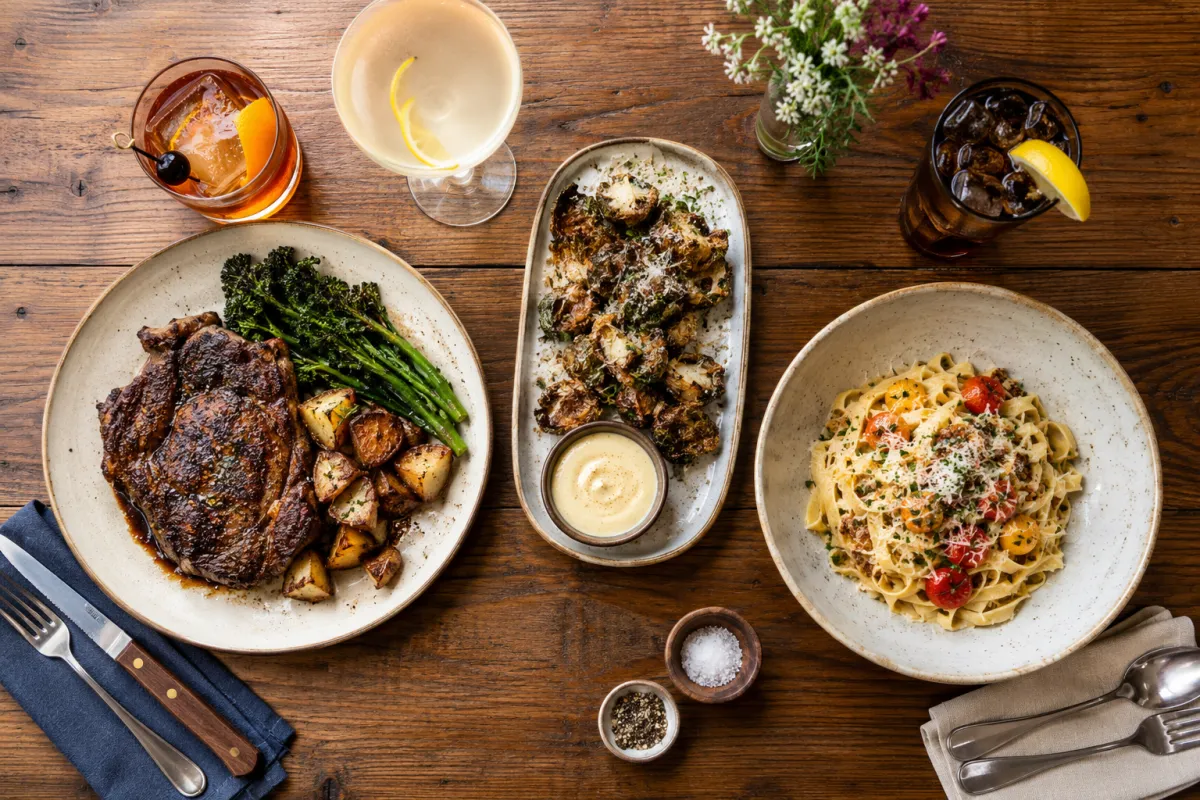
Double date situations at a glance
Use this table to find your situation fast. The “usual norm” column is what most couples in the US and Canada would expect. The exceptions column covers the cases where you should adjust.
| Situation | Usual norm | Exceptions |
|---|---|---|
| Mutual plan (“Let’s all grab dinner this weekend”) | Split the check evenly by couple | Big spending gap: the higher-spending couple offers to cover the difference or the tip |
| One couple invites the other as a treat (“We want to take you out”) | Inviting couple pays the whole bill | Invited couple offers to chip in, often by covering the tip or drinks, and returns the favor later |
| Celebrating the other couple (engagement, new job, new home) | The couple who suggested the celebration often treats | If the celebrating couple organized it and picked the venue, they are hosting, or it reverts to a couple split |
| One couple doesn’t drink, the other orders a lot of alcohol | Split food by couple, drinking couple covers their drinks | If the gap is small, a plain 50/50 split is fine |
| One couple is on a tight budget | Agree before the meal: cheaper venue or pay your own | The other couple may choose to treat, stated clearly as a gift |
| Double date with a couple you just met | Split by couple; asking for two checks up front is normal | If they invited you as a welcome, they may host |
| Visiting couple from out of town | Local couple often treats the first meal | Visitors reciprocate with a later meal or offer to split the next one |
| You double date with the same couple often | Alternate who treats, or split by couple every time | If alternating feels uneven, switch to a standing 50/50 split |
Why split by couple instead of four ways
A four-way split treats the table as four separate wallets. That rarely matches reality. Couples share plates, split a bottle, and often pay from a joint account or take turns covering each other. Splitting by couple respects how couples actually spend and keeps the math simple: one bill, two halves.
Etiquette guidance is consistent on this. The recommended standard is to divide the bill evenly between the couples, rather than split it four ways or leave it to one person (double-date etiquette summary). It also spares your server from running four cards for one table.
Itemizing has a social cost too. When someone starts reading line by line (“I only had the chicken and one beer”), the mood shifts from a shared evening to an audit. Among friends who see each other often, small differences even out over time. A couple split lets you skip that conversation entirely.
When a four-way or itemized split makes sense
There are a few honest exceptions. If one “couple” is a brand-new pair still going Dutch, each person may want to pay their own. If a single friend tags along and it becomes a table of five, splitting by household (two couples and one individual) gets messy, so separate checks or pay-your-own can be cleaner. And if anyone has a strict budget, itemizing is far kinder than an even split they can’t afford. When in doubt, ask before ordering, not when the check lands.
When one couple invites the other
The wording of the invitation decides a lot. Guidance on double dates draws a clear line: if one couple explicitly invites the other out as a treat, such as “We want to take you out to this new restaurant to celebrate,” the inviting couple should ideally pick up the entire bill, while a mutual “Let’s all grab dinner this weekend” reverts to splitting by couple (hosting vs. mutual plans).
This is the same logic behind the broader principle we cover in when “whoever invites pays” applies and when it doesn’t. Suggesting a meal is not the same as hosting it. Hosting language includes “our treat,” “take you out,” “we’d love to have you as our guests” and “to celebrate you.” Neutral language includes “want to get dinner?” and “let’s try that new place.”
If you’re the hosting couple
- Pick a restaurant you can comfortably cover for four, drinks and tip included.
- Say it plainly in the invitation so the other couple doesn’t arrive braced to split.
- Handle the check quietly. Hand your card to the server early or step away to settle it.
- Decline a counter-offer warmly, once or twice. Don’t argue at length.
If you’re the invited couple
- Offer once, sincerely, to contribute. Offering to cover the tip or a round of drinks is a graceful middle ground.
- If they decline, accept with real thanks. Repeated insisting can feel like you’re rejecting the gift.
- Order in line with the hosts. Skip the most expensive item unless they encourage it.
- Return the favor later: host the next meal, cook for them, or bring something thoughtful to your next get-together.
Celebrations
If you’re celebrating the other couple, such as an engagement, a new baby on the way or a big promotion, it’s a kind gesture to treat them, and saying so up front avoids confusion. If the celebrating couple organized their own dinner and invited you, they are effectively hosting, though many couples in that position still expect a split. When it’s unclear, ask. For group celebrations beyond four people, our guide to group birthday dinner rules and scripts covers how to split the guest of honor’s share.
When one couple orders a lot more
An even couple split assumes both couples ordered roughly the same. When that isn’t true, fairness calls for a small adjustment. The usual practice is that the higher-spending couple offers to cover the difference or handles the tip. The lower-spending couple shouldn’t have to raise it.
Typical cases where the gap is real:
- One couple orders cocktails or a bottle of wine, and the other drinks water or soda.
- One couple orders premium mains or a tasting menu, and the other orders modest entrées.
- One couple adds appetizers and desserts the other doesn’t touch.
The easiest fix is to separate drinks. Split the food by couple and let each couple cover their own alcohol. Another option is for the bigger spenders to cover the full tip. If the gap is small, such as one extra appetizer or one more glass of wine, just split evenly. Nobody wants a recount over minor differences, and among regular double-date partners it evens out.
If you’re the lower-spending couple
Speak up early, ideally when ordering or even before the meal: “We’re keeping it light this time, mind if we do drinks separately?” That is far easier than objecting once the check is on the table. If you didn’t say anything and the other couple doesn’t offer, let it go this once and set expectations next time.
How each couple handles their half
Once the check is split by couple, each couple settles their half however they like, and that stays private. Some couples pay from a joint card. Some alternate. Some have one partner pay and settle up later through Venmo or Interac e-Transfer. None of that needs to happen at the table, and the other couple doesn’t need to know.
Couples who don’t share finances can sort out their arrangement before the meal or afterward. Doing the math in front of the other couple can feel awkward, especially when one pair is newer. If you double date often with the same people, a shared tracker can help. Our comparison of free bill-splitting apps covers options that handle couple-level splits.
A note on gender norms. Within some couples, one partner usually covers dates, often the man in traditional pairings. That expectation does not extend across couples. On a double date, nobody expects one man to pay for the other couple. Each couple covers itself unless someone is clearly hosting.
Scripts for every moment of the check
Most check awkwardness comes from silence, so a short, warm sentence fixes it. Here is wording you can use as-is. For more options, see our guides on how to ask to split the bill and how to offer to pay politely.
Before the dinner
- “Want to do dinner Saturday? Split by couple like usual?”
- “We’re being a bit careful with money this month. Could we pick somewhere casual, or each pay our own?”
- “Let’s try that new place. Fair warning, it’s on the pricier side. Still up for it?”
When you’re hosting
- “This one’s on us. We’ve been wanting to take you two out.”
- At the table: “Put that away, please. We planned this one.”
- If they insist: “Honestly, it makes us happy. You can get the next one.”
When you’re invited
- “That’s so generous, are you sure? At least let us get the tip.”
- Accepting: “Thank you, really. Next one’s ours.”
When orders are uneven
- “We went big on the wine, so let us cover that part.”
- “We’re skipping drinks this time. Mind if we split food by couple and do drinks separately?”
- “We ordered way more than you did, so we’ve got the tip.”
When the check arrives
- To the table: “Half and half?”
- To the server: “Could you split this evenly onto two cards, please?”
When someone pays without asking
- “You didn’t have to do that! Thank you, we’ve got the next one.”
- “That’s really kind. Let us send you our half, or we’ll take you out next time. Your pick.”
Related situations: friends, Mother’s Day and farewells
The same logic applies at many other tables: work out who is hosting, treat households as units when it helps, and adjust for big spending gaps. Here is how it plays out in three common cases.
Who pays when friends go out
When friends go out on a mutual plan, the usual practice is either an even split or pay your own, and the group should agree before ordering. If couples are part of the group, splitting by household (each couple as one share, each single friend as one share) keeps things fair without itemizing. If one person organized the evening as their treat, they host. If it’s someone’s birthday, the group typically covers the guest of honor’s share.
Who pays for Mother’s Day dinner
For Mother’s Day dinner, the common practice is that adult children treat their mom. When several siblings are involved, they split the cost among themselves, and each sibling’s partner usually counts as part of that sibling’s household rather than adding a separate share. If mom’s spouse joins, siblings often treat both parents or the spouse chips in, so agree on that in advance. If mom insists on paying, accepting graciously is fine, or let her cover something small like dessert so she still feels part of it.
Who pays for a farewell dinner
For a farewell dinner among friends, the usual norm is that the group treats the person who is leaving and divides their share among everyone else. If the person leaving invites everyone to a goodbye meal, they are hosting, or they may state up front that it’s pay your own. For a work farewell, the company or manager often covers the meal. When they don’t, colleagues typically split the honoree’s share.
Tipping, separate checks and other logistics
- Tell the server early. Saying “two checks, one per couple” or “one check, split in half” at the start makes the end of the meal faster.
- Tip on the whole meal. In the US and Canada, tipping is expected at sit-down restaurants. If you split by couple, each couple tips on their half at their usual rate, or one couple covers the full tip as a gesture.
- Shared dishes go in the middle. Appetizers, bottles and desserts ordered for the table belong in the even split, not to whoever ordered them.
- A reservation doesn’t mean you’re paying. Booking the table under your name is logistics, not hosting.
- Meeting a new couple? If the other pair are people you’ve only met recently or online, choose a public restaurant, tell a friend where you’ll be, arrange your own way home, and feel free to leave if anything feels off.
Want to turn this into an actual plan? MeetNow is a free app for meeting people in person: a host posts a plan at a public place, says who pays (host pays, split, pay your own or free) and picks who joins. It is live on the web and works in your browser, starting in Malta. The Android app is on Google Play; the iPhone app is not in the App Store yet. Open MeetNow and see the plans posted in Malta.
FAQ
Should a double date be split four ways or by couple?
By couple is the usual practice. Treat each couple as one unit and divide the check in half. Couples tend to share dishes and drinks and often share finances, so a couple split is simpler and avoids itemizing at the table.
Who pays if one couple invited the other?
If the invitation was framed as a treat, such as “we want to take you out,” the inviting couple usually pays the whole bill. The invited couple should offer to contribute, for example by covering the tip, and return the favor later. A mutual “let’s get dinner” plan reverts to splitting by couple.
What if the other couple ordered a lot more than we did?
The usual practice is that the higher-spending couple offers to cover the difference or the tip. If they don’t, you can suggest splitting food by couple and handling drinks separately, ideally when ordering rather than when the check arrives. Small gaps are best ignored.
Is it rude to ask for separate checks on a double date?
No. Asking the server for two checks, one per couple, is normal and polite, especially if you tell them at the start of the meal. It’s often easier than splitting one check onto two cards at the end.
Should the men pay for everyone on a double date?
No. Even in couples where one partner usually pays for dates, that expectation does not extend across couples. Each couple covers its own half unless one couple is clearly hosting.
How should we take turns if we double date with the same couple often?
You can alternate who treats, or simply split by couple every time. Alternating works well when meals are similar in cost. If it starts to feel uneven, switch to a standing 50/50 couple split so nobody has to keep score.